
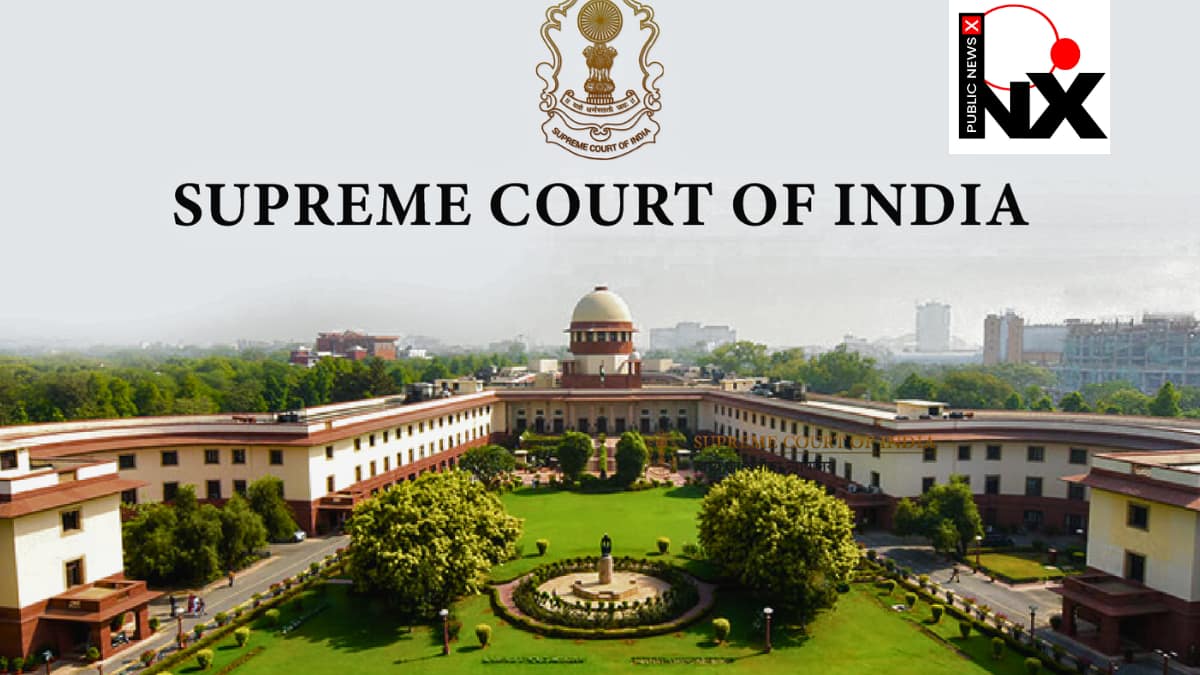
New Delhi: The Supreme Court on Friday observed that making menstrual leave mandatory at workplaces could adversely affect women’s employment prospects, saying employers may become reluctant to hire women if such leave is made compulsory by law.
The court made the remarks while hearing a plea seeking menstrual leave for female students and working women across India.
A bench comprising Chief Justice of India Surya Kant and Justice Joymalya Bagchi said that while menstrual leave granted voluntarily by employers would be welcome, a legally mandated policy could end up working against women in the job market.
The bench noted that compulsory leave provisions may create an unintended disincentive for employers, especially in private sector hiring.
The CJI said it would be “excellent” if private companies chose to offer menstrual leave on their own, but added that the moment such a provision is made compulsory in law, women may face discrimination in recruitment.
The court said such a move could result in employers viewing women as a hiring burden, thereby harming career opportunities instead of strengthening workplace support.
The top court was hearing a public interest litigation (PIL) seeking a nationwide policy for menstrual leave for both women employees and female students. The matter was heard in the case Shailendra Mani Tripathi vs Union of India, according to reports.
The petitioner had sought judicial intervention for a uniform framework applicable across educational institutions and workplaces.
During the hearing, the bench also flagged concerns over the broader framing of such pleas. The CJI reportedly remarked that petitions seeking a compulsory menstrual leave law risk portraying menstruation as something negative or as a condition that marks women out as “inferior”, instead of normalising it as a natural biological process.
The bench indicated that the issue requires a sensitive balance between welfare and equality, and that a rigid legal mandate may unintentionally reinforce stereotypes.
At the same time, the court did not reject the idea of menstrual leave in principle. It drew a clear distinction between voluntary policy measures and a compulsory legal requirement.
The bench indicated that if institutions, state governments, or private employers choose to provide such leave voluntarily, that would be a positive step. It specifically noted that examples already exist where such measures have been introduced in limited form.
During arguments, the petitioner’s counsel reportedly pointed to examples such as Kerala, where certain relaxations have been introduced in schools, and some private companies that have extended menstrual leave benefits to women employees.
However, the bench maintained that these examples do not automatically justify a nationwide mandatory legal framework imposed through judicial directions.
The Supreme Court ultimately declined to entertain the plea and disposed of the PIL. However, it did not completely shut the door on policy consideration.
The bench said the competent authority may examine the petitioner’s representation and consider the possibility of framing a policy on menstrual leave after consulting all relevant stakeholders. This means the issue may still be considered at the executive or policy-making level rather than through a court-mandated order.
This is not the first time the issue has come before the courts. Reports noted that this was the third PIL filed by the same petitioner on the subject. Earlier petitions were also disposed of with liberty to approach the government or relevant ministries.
In a previous round, the court had similarly indicated that the question involves competing policy considerations and is better examined by the executive rather than through a blanket judicial mandate.
The debate over menstrual leave has remained contested across India. Supporters argue that such leave recognises menstrual pain, discomfort and workplace realities faced by many women, and can improve dignity and health outcomes.
Critics, however, warn that compulsory leave rules may deepen gender bias by encouraging employers to see women as less employable or more costly to hire. The Supreme Court’s latest remarks reflect this second concern, while still leaving room for voluntary or consultative policy measures.
The ruling is likely to reignite discussion around whether menstrual leave should be framed as a legal entitlement, a workplace policy option, or a broader gender-sensitive welfare measure shaped through consultation with employers, employees, educators and governments.
For now, the Supreme Court has made it clear that it is unwilling to impose a nationwide mandatory rule through judicial order.
Share this content: