
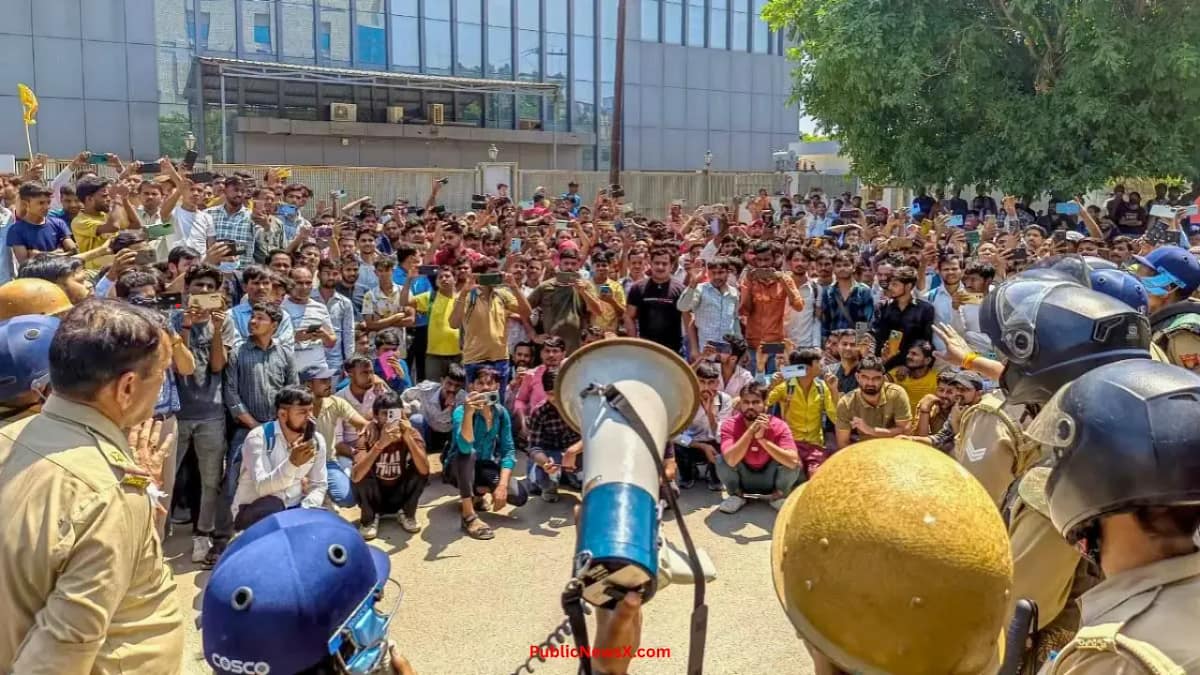
New Delhi: Long known as a global hub for affordable manufacturing, India is now confronting growing unrest among the very workforce that powered its rise.
Violent protests in Noida today have brought the country’s “cheap labour” model under renewed scrutiny, exposing cracks in an economic strategy that has long prioritized low costs over worker welfare.
The unrest began as a coordinated demonstration by factory workers across industrial sectors in Noida, a key manufacturing zone in the National Capital Region. Workers took to the streets demanding wage hikes, regulated working hours, and improved labour conditions.
Many claim they work shifts stretching up to 12 hours while earning wages that have failed to keep pace with rising living expenses.
What started as a peaceful protest quickly escalated. Reports from ground zero described stone-pelting, torched vehicles, and clashes with police forces. Authorities responded with crowd-control measures, including the use of tear gas, as the situation spiraled beyond control.
At the heart of the protest lies a widening gap between economic growth and worker compensation. While India has positioned itself as an attractive destination for global manufacturing, often marketed on the strength of its low-cost labour, workers argue that the benefits of this growth have not been equitably shared.
A major flashpoint has been wage disparity within the region. Workers in neighbouring industrial belts, particularly in Haryana, have recently seen wage revisions, intensifying frustration among Noida’s workforce. “We are doing the same work but earning less,” said one protester, reflecting a sentiment echoed across the demonstrations.
Labour experts warn that the Noida unrest may be symptomatic of a broader structural issue. India’s competitive edge in manufacturing has historically relied on keeping labour costs low. However, as inflation rises and urban living costs increase, this model is becoming harder to sustain without triggering social unrest.
“The idea of ‘cheap labour’ is reaching its limits,” said an industry analyst. “Workers today are more aware, more connected, and less willing to accept stagnant wages in a growing economy.”
The government and local administration have called for calm, urging dialogue between employers and worker representatives. However, the scale and intensity of the protests suggest that incremental measures may not be enough.
The events in Noida could have far-reaching implications. If similar sentiments spread to other industrial hubs, India’s manufacturing ambitions, particularly its efforts to position itself as an alternative to China, could face new challenges.
For now, Noida stands as a stark reminder that economic models built on cost advantages must eventually reconcile with human realities. As one observer noted, growth without inclusion risks turning strength into vulnerability.
Share this content: