
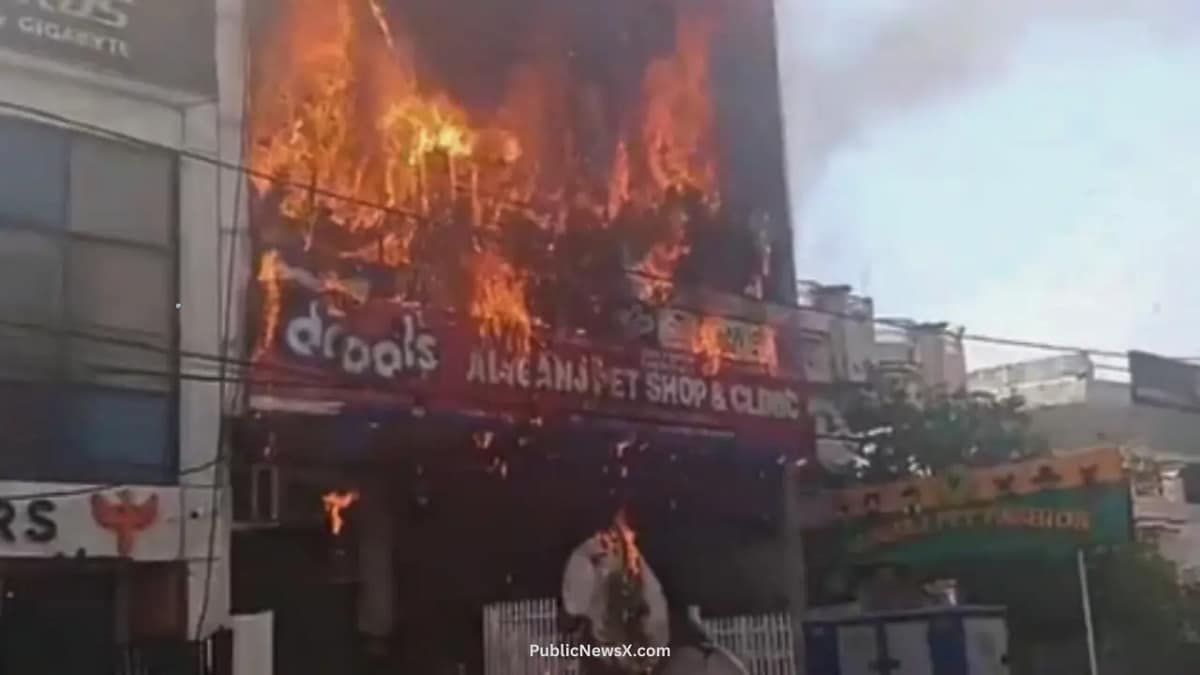
Lucknow/ New Delhi: The massive fire that engulfed a commercial complex in Lucknow’s Aliganj, leaving at least 15 people dead, has raised questions that go beyond the immediate cause of the blaze.
While investigators examine how the fire started, the larger issue now is whether gaps in safety checks, building regulations and enforcement allowed the tragedy to become so deadly.
The fire broke out in a building that reportedly housed multiple establishments, including a coaching center, library, gaming zone and other commercial activities.
Within minutes, the structure turned into a scene of panic as smoke spread rapidly and several people struggled to find a way out.
Rescue teams battled through intense conditions to reach those trapped inside, while survivors described desperate attempts to escape.
The incident has once again brought attention to the safety of crowded commercial buildings in Indian cities. A building may have approvals on paper, but the real question is whether safety measures remain effective when hundreds of people occupy the space every day.
Investigators are expected to look into whether the premises had the required fire safety clearances, whether emergency exits were accessible and whether firefighting systems were functional at the time of the incident.
The probe will also examine whether the building was being used in a way that matched its approved purpose or whether multiple commercial activities had increased the risk beyond what the structure was designed to handle.
The presence of a coaching center has added another layer to the investigation. Thousands of students across India spend long hours inside such facilities, many of which operate from commercial buildings.
The Lucknow tragedy raises questions about how frequently these centers are inspected, how occupancy limits are monitored and who ensures that basic emergency arrangements are in place.
Similar fire incidents in the past have often exposed a common pattern: safety rules exist, but enforcement remains a challenge. Inspections, permissions and compliance certificates become crucial only when authorities verify that they reflect the actual condition of a building.
The focus of the investigation will now extend beyond the source of the fire.
Authorities will have to determine whether any safety violations existed, whether they were overlooked and whether timely action could have prevented the loss of lives.
For the victims’ families, the question is not only how the fire started, but whether a disaster of this scale could have been avoided.
The Lucknow fire has become a test of how seriously cities treat public safety.
The inquiry will determine the immediate cause of the tragedy, but it must also answer a larger question: If safety checks were in place, why did a building meant for public use become a death trap?
Share this content: