
New Delhi: When the Iranian frigate IRIS Dena sailed into Visakhapatnam for India’s International Fleet Review 2026, she came as an invited guest. She never made it home.
On March 4, a US Navy submarine torpedoed and sank the vessel in international waters south of Sri Lanka, squarely within the Indian Ocean Region that New Delhi claims as its strategic neighbourhood.
India said nothing. No condolence. No protest. Not a syllable from Prime Minister Modi.
India’s Opposition argues, the loudest statement India’s government has made in years, a signal that New Delhi has chosen its friends, and Tehran, Moscow and the broader BRICS world are no longer among them.
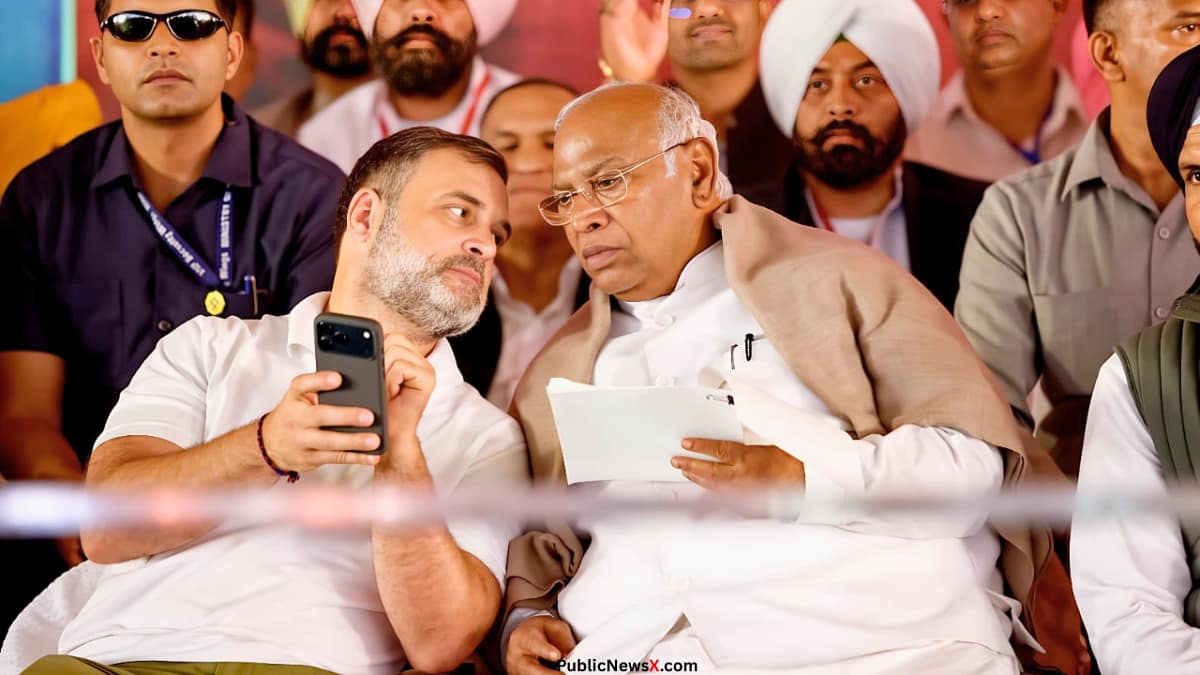
“Modi Govt’s reckless abdication of India’s strategic and national interests is there for all to see.” – Mallikarjun Kharge: Leader of Opposition Rajya Sabha; India
Three Crises, One Strategic Failure
The sinking of the IRIS Dena is only one front of a multi-pronged crisis. As many as 38 Indian-flagged commercial vessels and 1,100 sailors remain trapped in the Gulf of Hormuz as the US-Israel-Iran conflict intensifies through.
Two Indian sailors, including Captain Ashish Kumar, have reportedly died.
The MEA’s March 3 statement acknowledged that ‘some Indian nationals have lost their lives or are missing’ cold comfort for the families of one crore Indians living across the Gulf region, many of whom are releasing desperate video messages seeking government help.
India reportedly has just 25 days of crude oil reserves. No public energy contingency plan has been announced.
Mallikarjun Kharge’s indictment on X: why lecture the world on MAHASAGAR and India as a ‘Net Security Provider’ in the Indian Ocean if you cannot respond when a guest ship is torpedoed in your own backyard? Rahul Gandhi was equally pointed: ‘Silence now diminishes India’s standing in the world.’
The Trade Deal That Revealed the Price Tag
The deeper story runs through the India-US interim trade deal announced on February 2, 2026. Washington agreed to reduce tariffs on Indian goods from a punishing 50 percent to 18 percent.
India agreed to zero tariffs on American goods and, critically, to halt purchases of discounted Russian crude oil.
The asymmetry is stark: America pays nothing; India pays 18 percent and surrenders its cheapest energy source in the middle of a Gulf war that is spiking global oil prices.
Rahul Gandhi called it ‘an arrow in the heart of farmers.’ Farmer unions have already termed it a surrender to US economic interests.
The question the government has not answered: if India can no longer buy Russian oil and cannot safely transit the Gulf, what exactly does this deal buy India in energy security terms? Venezuela has been floated as an alternative supplier, a longer route, a heavier crude requiring refinery upgrades, and a country whose relationship with Washington is itself volatile.
BRICS, Autonomy and the Axis Question
India built its global identity on strategic autonomy the principled refusal to be any great power’s client. That identity allowed New Delhi to be simultaneously a Quad partner, a Russian arms buyer, a BRICS founding member and a friend to Tehran.
The events of early 2026 suggest that balancing act is over. India was, by analyst accounts, the quietest BRICS voice when the US struck Iran. It said nothing when Iran’s Supreme Leader was assassinated.
It said nothing when a ship it had invited was sunk. The cumulative picture is of a country drifting unmistakably toward the Washington–Tel Aviv bloc, while officially insisting nothing has changed.
The economic stakes are substantial. Abandoning Russian oil will widen India’s import bill. Zero-tariff access for American goods threatens domestic manufacturing and agriculture.
Disrupted Gulf shipping routes hit the remittance lifeline of millions of families. And if BRICS partners- Russia, Iran, China conclude that India is no longer a credible independent voice, New Delhi probably loses the leverage it has spent decades accumulating in the Global South.
The Questions That Demand Answers
Why did India not react to the sinking of its naval guest? What is the government’s evacuation plan for one crore citizens in the Gulf?
Has India formally committed to ending Russian oil purchases and if so, what replaces them? And the moral question Rahul Gandhi has posed directly: does India endorse the assassination of foreign heads of state?
India has spent seventy years insisting that sovereignty is inviolable and that great powers cannot bomb smaller nations into submission.
Whether that principle survives 2026 and on whose terms is the question this government owes its citizens an honest answer to.
Share this content: