
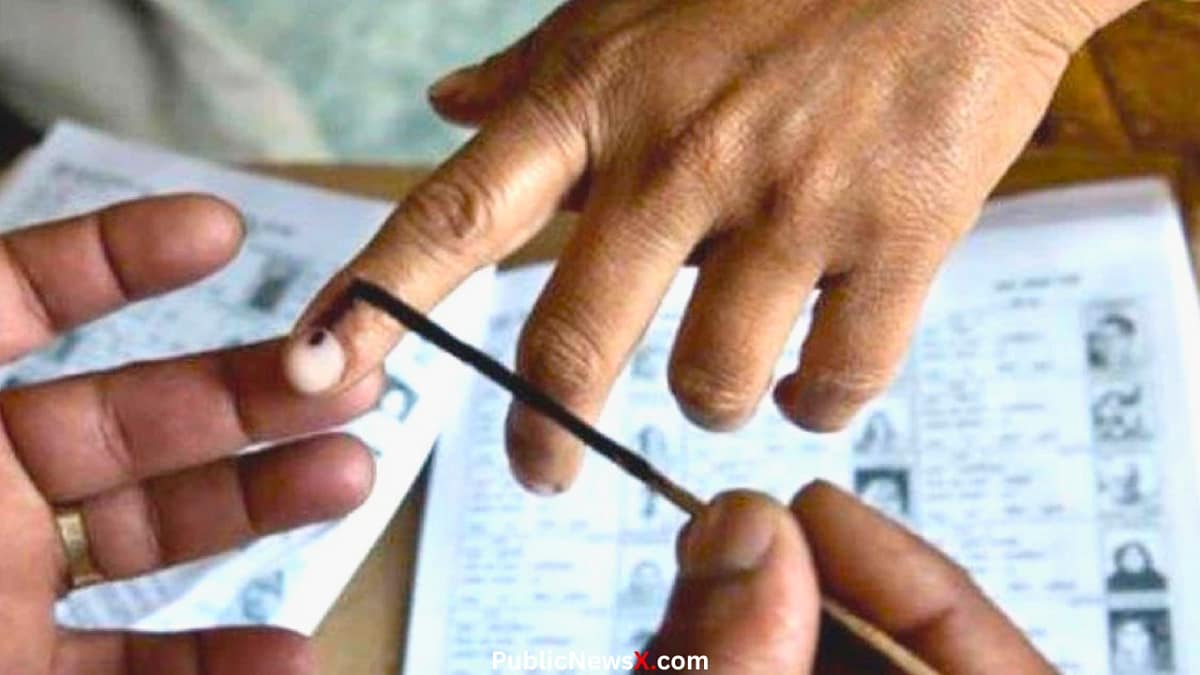
New Delhi: The political battle for power in West Bengal has formally begun after the Election Commission of India announced that the 2026 assembly election will be held in two phases on April 23 and April 29, with results on May 4.
The decision marks a sharp shift from the marathon eight-phase election held in 2021 and has triggered fresh political calculations across the state.
For the ruling All India Trinamool Congress led by Chief Minister Mamata Banerjee, the campaign opened with renewed welfare messaging.
Banerjee announced a ₹500 increase in the monthly honorarium for religious functionaries including purohits and muezzins, a move widely seen as reinforcing her government’s outreach to multiple social groups ahead of the polls.
The opposition Bharatiya Janata Party has responded with its own economic promises, unveiling a proposed “Annapurna Yojana” that would provide monthly financial support to women and pledging a large economic package aimed at employment and industrial growth if it comes to power.
But beyond welfare announcements, the election campaign has also been shaped by a contentious dispute over the electoral rolls.
Opposition parties and civil society groups have raised concerns that thousands of voter names have been deleted or placed under review during the Special Intensive Revision process.
In some areas, particularly in the Matua-dominated belt of north Bengal, reports of large-scale deletions have triggered political tensions ahead of polling.
The Communist Party of India (Marxist) has said it plans to approach the Supreme Court over the issue, alleging that millions of voters could be affected if the pending cases are not resolved before polling begins.
The announcement of the election schedule has also intensified rhetoric between the state’s two principal rivals.
The BJP is seeking to expand beyond its strongholds after emerging as the main opposition in the 2021 election with 77 seats, while the Trinamool Congress aims to defend the overwhelming mandate it secured in the last assembly.
Political observers say the coming campaign is likely to revolve around a familiar set of issues: welfare politics, identity debates around citizenship and migration, employment concerns, and questions about law and order.
With the Model Code of Conduct now in effect and the election clock ticking, the contest in Bengal has moved from policy announcements to full-scale political mobilisation.
The shift from an eight-phase election in 2021 to just two phases this year may compress the campaign calendar, but it is unlikely to soften the intensity of one of India’s most closely watched state elections.
Share this content: