
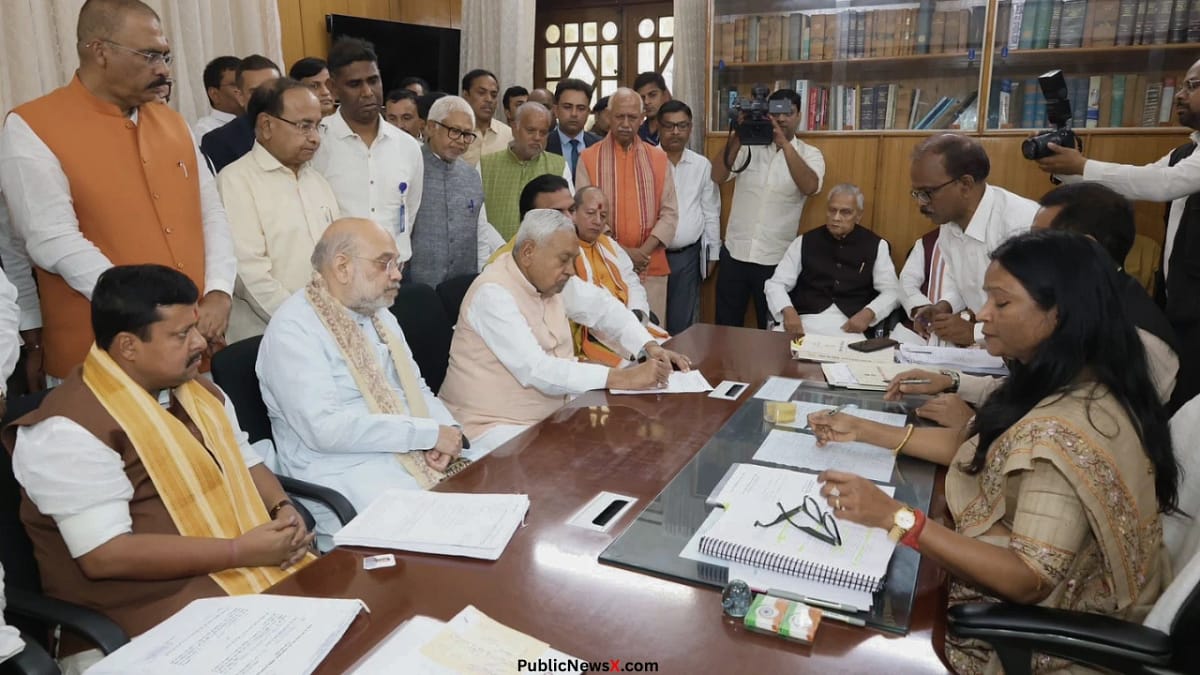
Patna/New Delhi: Bihar Chief Minister Nitish Kumar resigned from his post on Thursday, bringing an end to his long and influential tenure. The veteran leader is set to contest for a seat in the Rajya Sabha, signaling a transition in Bihar’s leadership within the ruling National Democratic Alliance (NDA).
Kumar, who took oath as chief minister for a record tenth time less than four months ago, confirmed that he would step down to pursue a parliamentary role.
The move presumably allows the BJP the largest party in the NDA coalition in Bihar to stake claim to the CM’s position for the first time.
BJP Poised to Lead Bihar Government
With 89 seats in the state assembly following the 2025 elections, the BJP now holds the numerical advantage within the alliance.
Party leaders are expected to meet in the coming days to decide on the new chief minister. Senior BJP leader Samrat Choudhary has emerged as a leading contender for the post.
Under a possible power-sharing formula, the Janata Dal (United), may retain key positions in the government, including deputy chief minister roles. Political observers says that arrangement could mirror the coalition structure previously seen in states like Maharashtra.
Rajya Sabha Election Trigger
The resignation coincides with elections to five Rajya Sabha seats from Bihar, scheduled for voting on March 16. Kumar filed his nomination earlier in the day in the presence of senior NDA leaders, including Union Home Minister Amit Shah.
Reports from Patna also indicated protests by some JD(U) workers outside Kumar’s residence, with party cadres expressing concern that the leadership change could weaken the party’s influence within the coalition.
Opposition Calls Move a “Betrayal”
Opposition parties, including the Rashtriya Janata Dal and the Indian National Congress, sharply criticized the development. Leaders accused Kumar of betraying the mandate and alleged that the move consolidates the dominance of Prime Minister Narendra Modi and the BJP in the politically crucial state.
A Long and Shifting Political Career
Kumar’s political journey spans more than four decades. He first entered the Bihar Assembly in 1985 as a member of the Janata Dal and later co-founded the Samata Party in 1994 after splitting from the camp of Lalu Prasad Yadav.
The Samata Party eventually merged with the BJP to form the JD(U) in 2003.
Before becoming chief minister, Kumar served as a Union minister in several portfolios between 1998 and 2004. He briefly held the chief minister’s office in 2000 for just seven days but returned to power decisively in 2005, beginning a long tenure that reshaped Bihar’s governance narrative.
Over the years, Kumar became known for his governance-focused image earning the nickname “Sushasan Babu” after launching infrastructure projects, improving road networks, and expanding electricity access.
However, his frequent alliance shifts between the BJP and opposition parties also drew criticism and earned him the political nickname “Paltu Ram.”
End of an Era in Bihar Politics
Kumar’s departure from the chief minister’s office marks the end of one of the longest political chapters in Bihar’s history. Analysts say the transition could usher in a new phase in which the BJP leads the state government directly while Kumar moves to a national legislative role.
The coming days will determine who will takes over the chief ministership and how the NDA balances power between its allies.
Share this content: