
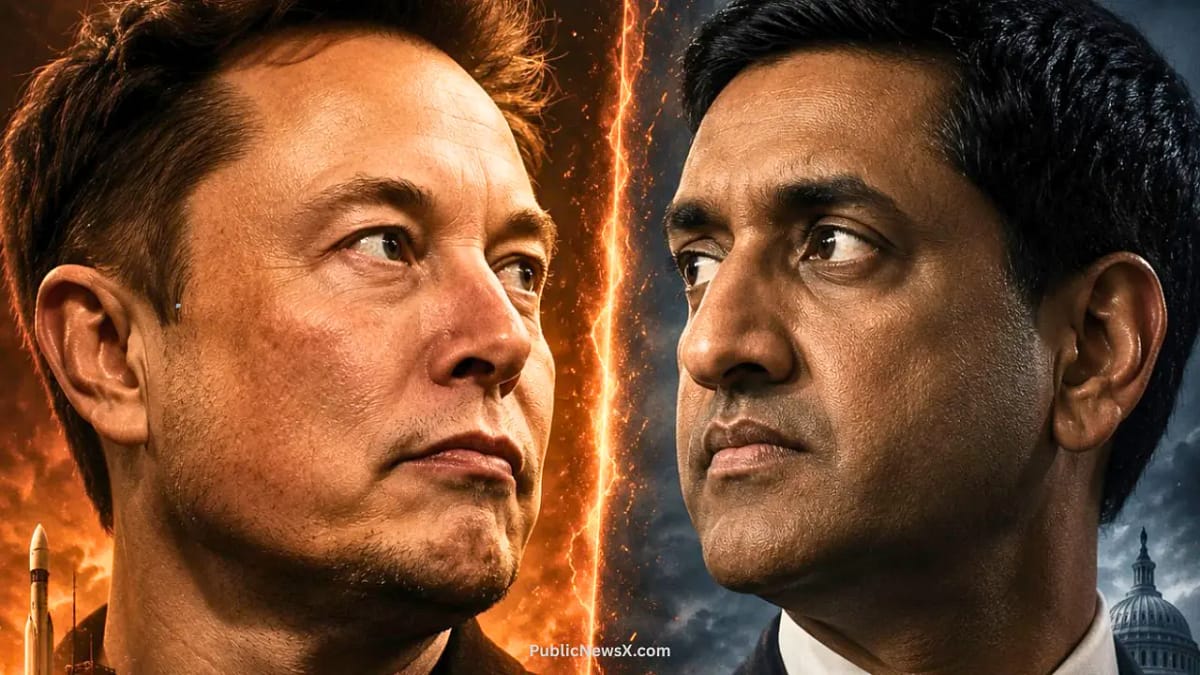
Washington/New Delhi: A political dispute between Democratic Congressman Ro Khanna and billionaire entrepreneur Elon Musk has escalated into a broader debate over foreign aid, government spending, and the consequences of large-scale cuts to the United States Agency for International Development (USAID).
The controversy began after Khanna criticized Musk’s role in the Department of Government Efficiency (DOGE)-backed restructuring of USAID, accusing him of ignoring the possible humanitarian impact of the cuts. Musk responded by rejecting the allegations and threatening legal action.
Speaking on the podcast “I’ve Had It,” Khanna argued that Musk should be held accountable for his involvement in reducing USAID operations. He referred to a 2025 study published in The Lancet, which examined the historical impact of USAID-supported health programs and modelled the possible consequences of major funding reductions.
Khanna cited the study’s projection that an 83% reduction in USAID programs could potentially lead to more than 14 million additional deaths globally by 2030, including around 4.5 million deaths among children under the age of five.
However, the figure is a projection based on modelling, not a record of deaths that have already happened. Researchers used historical data from more than 100 countries to estimate how reduced aid could affect healthcare, vaccination, disease prevention, nutrition programs and other public health systems.
The study found that USAID-supported programs between 2001 and 2021 were associated with significant reductions in mortality worldwide. Researchers estimated that such programs contributed to millions of lives being saved, particularly through efforts targeting diseases such as HIV/AIDS and malaria, maternal health, childhood illnesses and basic healthcare access.
Khanna compared the humanitarian concerns surrounding USAID cuts with Musk’s wealth growth and influence in the technology sector. He argued that while companies linked to Musk have created enormous economic value, government decisions affecting global aid could have consequences for vulnerable populations.
The congressman also said that if Democrats regain control of Congress, there should be investigations and possible subpoenas into the decisions surrounding USAID restructuring.
Musk pushed back strongly against Khanna’s remarks. In a post on X, he wrote, “Time to sue this liar,” signalling a possible legal response. Musk defended DOGE’s actions, arguing that the restructuring was intended to reduce waste, improve accountability and ensure government funds were reaching legitimate recipients.
Supporters of Musk’s position have argued that foreign aid programs require stronger oversight and that concerns over fraud, inefficiency and misuse of funds justified a review. Critics, however, say the scale and speed of the cuts risked damaging programs that provide essential healthcare, food assistance and emergency support in developing countries.
The dispute has also raised questions about the legal boundaries of political criticism. Legal experts note that defamation cases involving public officials and public policy debates are difficult to prove, especially when statements are based on published research and include qualifying language rather than presenting disputed claims as proven facts.
At the center of the clash is a larger question looms: Should foreign aid be judged mainly by concerns over spending and oversight, or by the potential human cost of reducing it?
Share this content: