
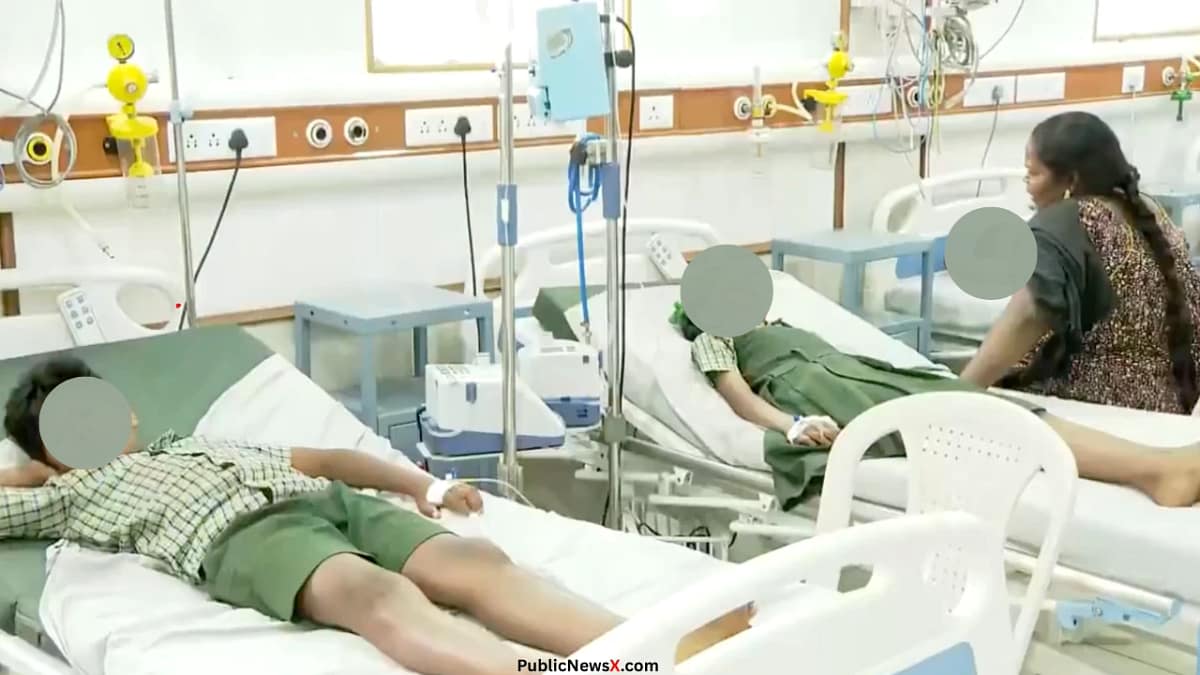
New Delhi: 43 students at a government middle school in Coimbatore, Tamil Nadu, fall ill after eating their mid‑day meal when a lizard reportedly is found in the food. Investigation into food safety lapses are underway.
School officials and parents clashed at the scene as police maintained order while an inquiry team examined the kitchen and meal preparation processes.
This is not the first time the safety and integrity of the programme have been questioned; with multiple cases over recent years showing a disturbing pattern of negligence, systemic weaknesses and alleged corruption that put children at risk.
2025 Bihar Dead Snake Meal and Rajasthan Hospitalisations
In April 2025, over 100 children in Patna, Bihar fell ill after consuming a mid‑day meal that reportedly contained a dead snake; an incident that sparked outrage and an NHRC notice demanding a detailed government response.
Earlier in September 2025, nearly 90 children in Chudiyawas village, Rajasthan suffered stomach pain and vomiting; in another suspected mid‑day meal poisoning case that prompted a state probe into food preparation standards.
Authorities in these cases described the incidents as potentially linked to severe negligence in food safety protocols; including improper inspection, local procurement lapses and insufficient oversight by the stakeholders.
Systemic Failures: Government Data on Contaminated Meals
The Union Education Ministry’s own data shows that over the past five years, 11 separate incidents of contaminated mid‑day meals were recorded across six states, affecting 674 children, demonstrating that food‑safety lapses remain a recurring problem.
Financial Greed: Multi‑Crore Scams and Fake Beneficiaries
Aside from contamination cases, financial irregularities and alleged corruption have also tainted the programme.
Rajasthan Rs 2,000 Crore Mid‑Day Meal Scam
An Anti‑Corruption Bureau (ACB) FIR filed in 2026 uncovered a massive alleged scam worth around Rs 2,000 crore tied to mid‑day meal supply contracts during the COVID‑19 pandemic.
The scheme involved supposed supply of dry food kits to schools that were shut, with payments cleared without actual delivery of goods.
Officials and private operators allegedly colluded on fake invoices, inflated rates and exclusion of qualified bidders, resulting in major financial loss.
With Enforcement Directorate involvement now reopened under money‑laundering laws, authorities say the probe could expand further.
Balrampur Mid‑Day Meal Scam in Uttar Pradesh
In late 2025, police in Balrampur district registered an FIR against 44 people, including officials, school principals and local representatives, for allegedly inflating student numbers to draw excess funds under the scheme; diverting at least Rs 11 crore intended for mid‑day meals to fake beneficiaries.
These scams reveal how greed and collusion have exploited government funds, eroding trust in a programme meant to fight child hunger.
The Chhattisgarh High Court intervened in mid‑day meal contamination cases, ordering state government compensation of ₹25,000 per child after 84 students were fed food that had been contaminated by a stray dog, highlighting judicial concern over lax supervision.
Experts and government audits suggest a broader pattern of food poisoning cases rising over the last six years, as students return to campuses post‑pandemic; underscoring weaknesses in hygiene, storage and quality controls despite updated food safety guidelines under the PM Poshan Scheme.
From food poisoning outbreaks to multi‑crore financial scams, incidents linked to the Mid‑Day Meal programme over the past five years reveal systemic failures; ranging from inadequate quality checks and negligent food handling to corruption that siphons off critical nutrition funds.
With recurring cases threatening child health and welfare, experts say reforms in procurement, stringent oversight (Social audit) and punishment of officials responsible are urgently needed to restore confidence in India’s flagship nutrition scheme.
Share this content: