
New Delhi: The Iran–US–Israel war entered its fifth day on Tuesday with no ceasefire in sight, after US–Israeli strike campaign inside Iran triggered a massive Iranian retaliation across the Middle East.
Preliminary figures indicate at least 787 people have been killed inside Iran, 11 in Israel, six US service members and at least eight civilians across Gulf states.
All numbers remain subject to revision as fighting continues and independent verification inside Iran remains limited due to internet blockade.
The escalation began after a third round of indirect nuclear talks in Geneva on February 26 reportedly ended without progress.
On February 20, US President Donald Trump had issued a 10-day deadline for a deal.
At 2:30 AM EST on February 28, Trump announced on Truth Social that US and Israeli forces had launched strikes on Iran.
Trump said that the objective was effectively regime change, citing what he described as Iran’s “menacing activities,” including alleged nuclear ambitions, support for regional armed groups and internal repression.
He warned that US casualties were possible, saying that “often happens in war.”
Within hours, Israeli and US strikes targeted senior Iranian leadership and strategic infrastructure. An airstrike on a defense council meeting killed Army Chief of Staff General Abdol Rahim Mousavi, Defense Minister General Aziz Nasirzadeh, IRGC chief Major General Mohammad Pakpour and senior security adviser Ali Shamkhani. Supreme Leader Ali Khamenei was killed when his compound was destroyed.
On March 2, Iranian authorities confirmed that his wife died of injuries sustained in the strike. Iranian media also reported that seven additional commanders, including the head of the armed forces commander-in-chief’s office, were killed in separate attacks.
Strikes hit multiple sites in Tehran, including the Ministry of Intelligence, the Ministry of Defence, the Atomic Energy Organization of Iran and the Parchin military complex.
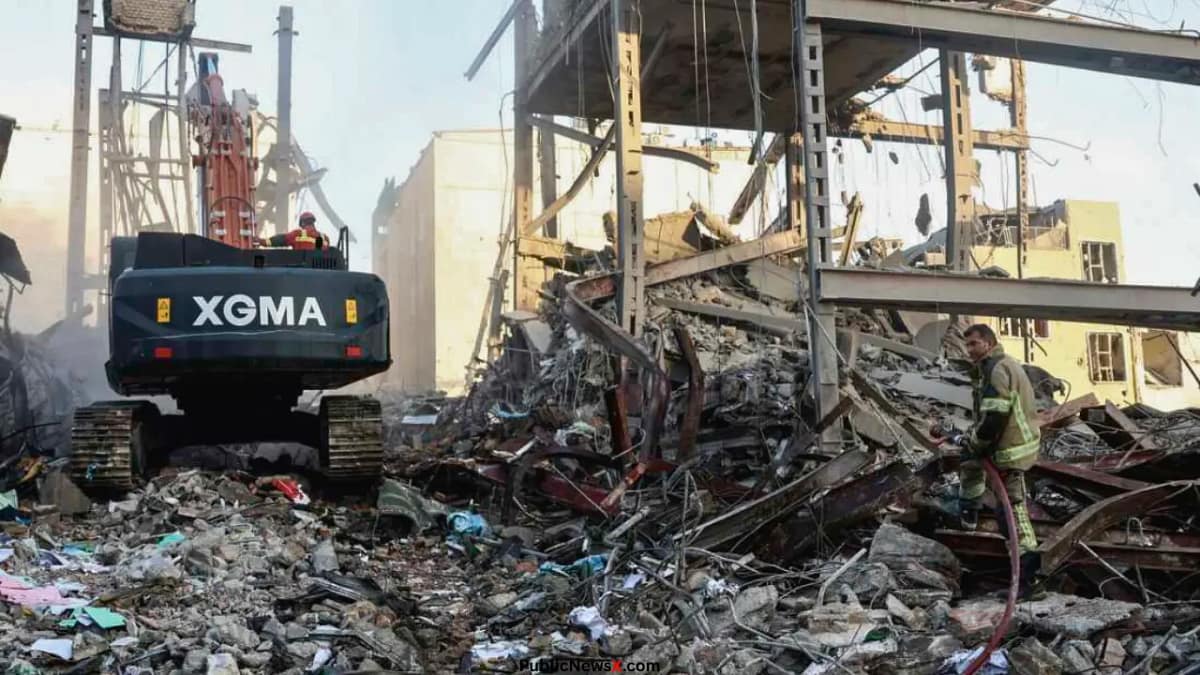
Missiles also struck University Street and the Jomhouri district. Iranian media reported that at least two students were killed in an attack on a school east of the capital. On March 2, footage broadcast by opposition-linked outlets showed the IRGC’s Malek-Ashtar building reduced to rubble.
In the early hours of March 3, Israeli aircraft struck the headquarters of the Islamic Republic of Iran Broadcasting. Iranian state-linked media indicated that the parliament building was also targeted.
The Israel Defense Forces said it destroyed the Supreme National Security Council headquarters along with command-and-control infrastructure and the president’s office, describing them as central regime targets.
American sources said Iranian naval capabilities in the Gulf of Oman were severely damaged, with several warships reportedly destroyed and key bases were hit.
The Israeli Air Force said it dropped more than 1,200 munitions across 24 of Iran’s 31 provinces in a single day. By March 1, nearly 2,000 combined US–Israeli strikes had been carried out, focusing on suppressing air defenses, degrading Iran’s retaliatory capacity and disrupting command structures.
Inside Iran, the Iranian Red Crescent initially reported 555 dead. By March 3, Al Jazeera’s preliminary tracker placed the toll at 787. More than 130 cities were reported to have come under attack. Iranian authorities said one strike killed more than 100 girls at an elementary school near a military base, one of the most contested and tragic claims of the conflict.
Iran declared 40 days of national mourning.
Tehran responded with retaliatory strikes that expanded the conflict across the gulf region. Iranian officials had previously warned that any US bases in the region would be considered a legitimate target.
On February 28 alone, Iran fired at least 247 ballistic missiles, including 137 toward the UAE, 45 toward Bahrain and 65 toward Qatar, along with 230 drones aimed at Gulf states. Within 36 hours, every member of the Gulf Cooperation Council reported incoming fire.
Airports, ports, oil facilities, residential towers and US military bases were struck, disrupting regional air travel and oil shipments.
In Israel, an Iranian ballistic missile strike in Beit Shemesh killed eight people and injured around 20. Hospitals in Jerusalem treated approximately 50 wounded.
Hadassah Ein Kerem reported treating 18 patients, including three children, one in serious condition, while Hadassah Mount Scopus treated 17, including four children.
A pregnant woman was among those evacuated. Earlier, a woman in the Tel Aviv area was killed by falling shrapnel from an intercepted missile. A nine-storey building in northern Israel was also hit. The total Israeli death toll stands at at least 11.
Projectiles were also launched from Lebanon toward Haifa and the Upper Galilee, setting off sirens across northern Israel. The IDF described the launches as an official declaration of war by Hezbollah.
US forces sustained confirmed losses as the retaliation unfolded. US Central Command announced on March 2 that six US service members had been killed in action. Two had previously been listed as unaccounted for before their remains were recovered from a struck facility. Reports said they belonged to a sustainment unit.
Iranian missiles targeted the US Navy’s Fifth Fleet headquarters in Bahrain’s Juffair area. Two ballistic missiles struck Al Udeid Air Base in Qatar, and a drone targeted an early warning radar installation.
The US Victory Base near Baghdad International Airport was also targeted. The US Embassy in Riyadh was struck by two drones, causing fire damage but no casualties as the building was empty. In Kuwait, a strike on Shuaiba port caused the first confirmed US fatalities.
The Gulf states absorbed heavy damage. The UAE was among the hardest hit, with 137 ballistic missiles and 209 drones fired toward it on February 28. Debris from intercepted missiles ignited fires at Jebel Ali Port, disrupting operations.
On March 1, a drone struck Zayed International Airport in Abu Dhabi, killing one person and injuring seven. A strike was also reported at a hotel complex in Dubai. Airports in Dubai, Abu Dhabi and Kuwait were struck, forcing airlines to suspend flights as regional airspace emptied.
In Bahrain, missiles targeted the Fifth Fleet headquarters and drones struck the international airport, causing material damage. Residential buildings in Manama were hit, and an Asian worker was killed when missile debris fell onto a vessel in Salman Industrial City.
In Qatar, two ballistic missiles struck Al Udeid Air Base and drones hit LNG facilities, halting production. The Qatari Interior Ministry confirmed 16 injuries, mostly from shrapnel, with one person seriously hurt.
In Saudi Arabia, drones targeted Aramco’s Ras Tanura refinery. Air defenses intercepted them, but debris ignited limited fires and operations were halted. Fires were also reported at the US Embassy compound in Riyadh.
In Oman, drones targeted Duqm port, injuring a foreign worker, and a tanker off Musandam was attacked, injuring four people. An Iranian drone also struck the British RAF Akrotiri base in Cyprus; the UK Ministry of Defence confirmed a live operational situation but reported no casualties.
Iran’s closure of the Strait of Hormuz impacting global energy markets. The waterway carries roughly 20 percent of the world’s traded oil.
Drone strikes were reported on the Honduras-flagged tanker Athe Nova, while the US-flagged Stena Imperative was hit by projectiles off Bahrain, causing a fire that was later extinguished. Energy prices reacted sharply amid fears of prolonged disruption.
Israeli Prime Minister Benjamin Netanyahu accused Iran’s leadership of decades of hostility and said the regime must not be allowed to obtain nuclear weapons. When informed of US casualties, Trump said losses were expected and promised to avenge the deaths of American soldiers. He predicted further casualties before the conflict ends.
UN Secretary-General António Guterres described the initial strikes as squandering a diplomatic opportunity and condemned both the US–Israeli action and Iran’s counter-strikes. The UN Security Council met in an emergency session on February 28 but passed no resolution.
China’s Foreign Minister Wang Yi condemned the killing of Iran’s leader as a violation of international law. France and Germany said they were considering defensive measures against further missile and drone attacks.
As of March 3, US and Israeli strikes continue inside Iran, including attacks on state media infrastructure. Israeli forces have intensified air operations in Lebanon and reportedly launched a new ground incursion into southern Lebanon.
Reports also indicate that Israeli special forces carried out a ground operation inside Iran, marking the first confirmed ground action on Iranian soil in the conflict. The head of the UN’s atomic energy agency has warned of increasing risks to nuclear safety as fighting continues.
The war remains fluid, with casualty figures rising and regional tensions escalating by the hour.
Share this content: