
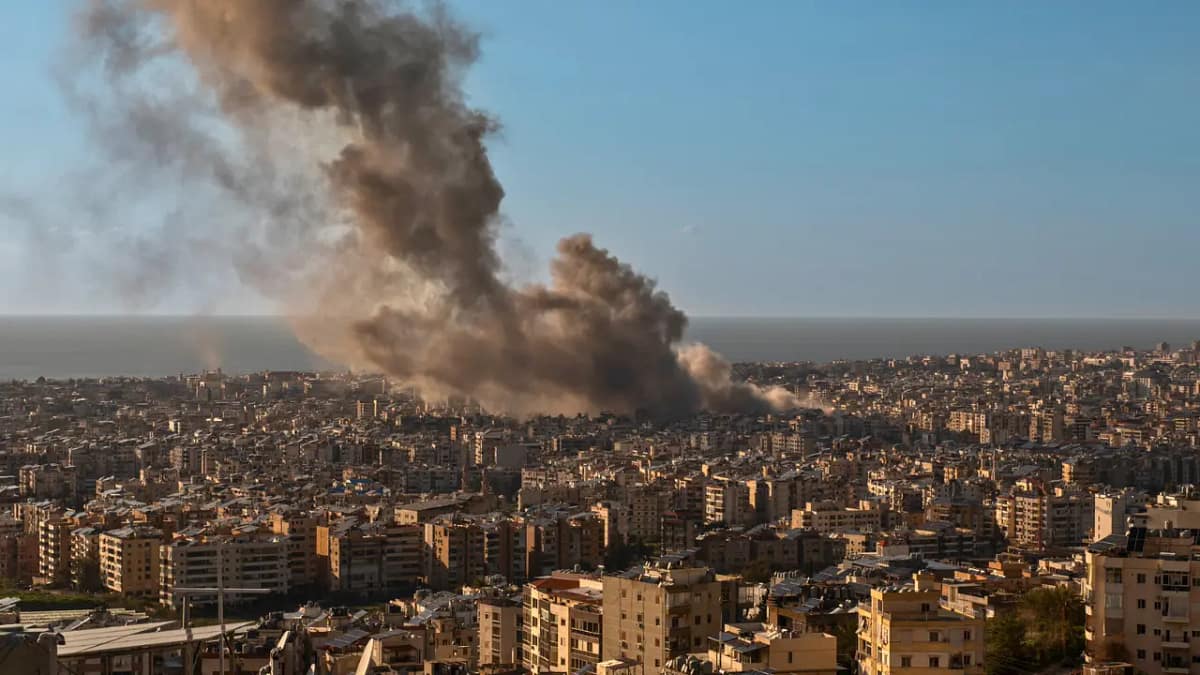
New Delhi: A major military confrontation involving Iran, United States and Israel has entered its fourth day with fighting widening across the region and creating international ripples in economy, diplomacy and security.
On 28 February 2026, Israeli forces launched Operation Lion’s Roar, a coordinated offensive involving air and missile strikes against Iranian strategic, command and military targets in Tehran, Isfahan and other major cities. The attack was executed jointly with the U.S. military, which also participated in strikes aimed at degrading Iran’s missile and naval capabilities. The operation reportedly targeted over 1,250 Iranian sites, including missile launch facilities, radar systems and defence headquarters.
The offensive resulted in the death of Supreme Leader Ayatollah Ali Khamenei, Iran’s highest political and religious authority, confirmed by Iranian state media on 1 March 2026. Khamenei’s killing represents a dramatic shift in Iran’s political hierarchy and deepened the crisis.
Iran immediately retaliated with ballistic missiles, cruise missiles, and drones striking Israeli territory and U.S. military bases across the Gulf. Gulf states, including Qatar, the United Arab Emirates, and Kuwait, reported repeated blasts and defensive interceptions as retaliation continued throughout Sunday and Monday.
By early March, preliminary casualty figures compiled by multiple sources indicate more than 555 dead inside Iran, at least 10 fatalities in Israel, and three U.S. service members killed in a combat zone near Kuwait, with reports of additional American casualties under review by the Pentagon.
The conflict has now drawn in allied militias, broadening its geographic footprint. Lebanese armed group Hezbollah fired rockets from southern Lebanon into northern Israel, prompting Israeli air assaults on Beirut’s suburbs. Lebanese health authorities reported 31 killed and 149 injured in strikes so far, amid mass evacuations and heightened cross-border tension.
Security tensions have also been reported in Cyprus, where Iranian or Iran-linked drones struck near the British sovereign bases of Akrotiri and Dhekelia, forcing air defences to engage multiple unmanned aircraft.
Civilian life across the region has been disrupted. Commercial airports in Dubai, Riyadh, Tel Aviv and Beirut suspended operations as airlines cited safety concerns amid missile threats and airspace closures. Reports indicate carriers have cancelled flights until at least Thursday, 5 March, stranding travellers and complicating international travel.
The war’s wider fallout has already affected global markets. Brent crude oil has risen nearly 9 percent in response to supply fears after disruptions around the Strait of Hormuz and attacks on Gulf energy infrastructure. U.S. President Donald Trump has said the military campaign could last “several weeks,” signalling that strikes will continue until objectives are achieved.
International diplomatic reaction has been intense. At a United Nations Security Council session, Secretary-General António Guterres condemned both offensive strikes and Iranian retaliation, warning that the conflict could engulf the region without urgent de-escalation. Russia and China demanded a ceasefire, while Western states reaffirmed their positions on Iran’s nuclear and missile threats.
Public sentiment in the U.S. shows a sharp divide, with only one in four Americans supporting the current strikes, according to a Reuters/Ipsos poll, reflecting growing domestic concern over the widening war.
The crisis has also prompted diplomatic strain within the Gulf. Saudi Arabia summoned Iran’s ambassador in protest after missiles reportedly threatened Saudi territory, underscoring the growing regional instability.
Israel, under a state of emergency declared on 28 February, has mobilised tens of thousands of reservists, restricted public gatherings, and moved key hospital services below ground amid continued missile alerts.
As military action continues, analysts warn that without a negotiated pause or ceasefire, the conflict risks drawing in additional nations, further disrupting energy supplies and escalating humanitarian fallout throughout the Middle East.
Share this content: