
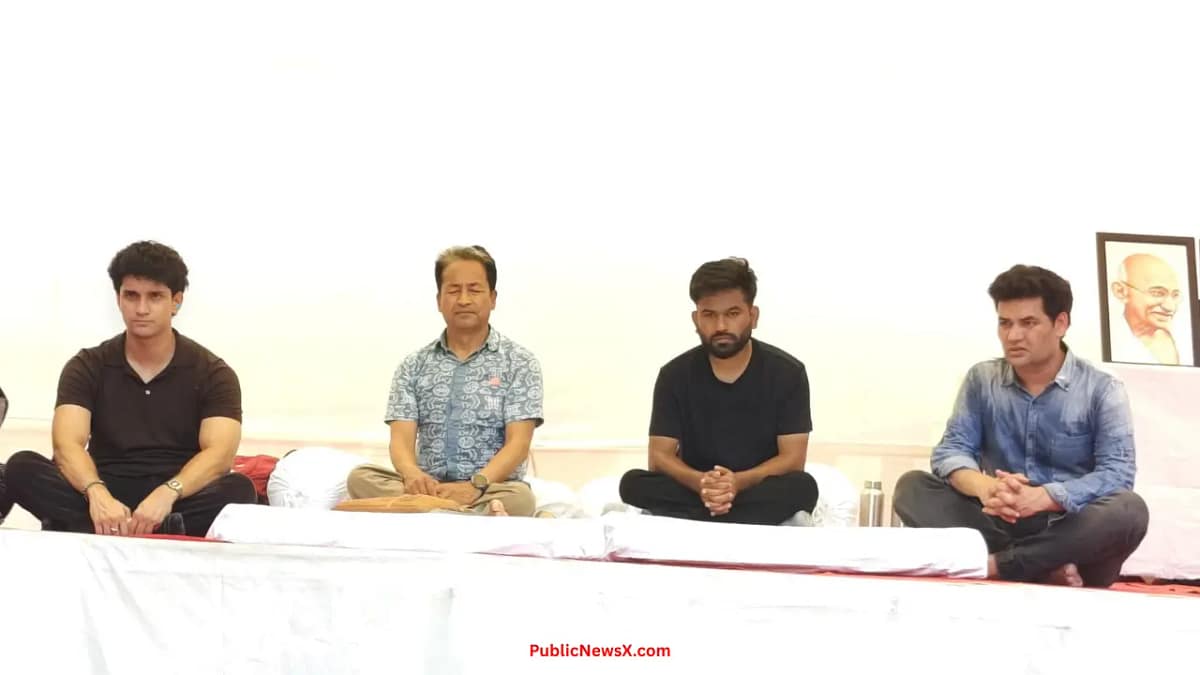
New Delhi: Climate activist and education reform advocate Sonam Wangchuk on Sunday began an indefinite hunger strike at Jantar Mantar, lending fresh momentum to the ongoing Cockroach Janta Party (CJP) protest over the alleged NEET paper leak and wider education reforms.
Braving Delhi’s intense summer heat, Wangchuk joined protesters who have been camping at the site since the second phase of the agitation began on June 20.
Wangchuk had earlier given the Centre until June 27 to respond to demands related to education reforms, environmental protection and democratic rights in Ladakh. With no concrete response forthcoming, he sat on an indefinite fast on Sunday, saying the issues could no longer be ignored.
The CJP movement has evolved rapidly over the past three weeks. What began as a satirical online campaign in mid-May turned into a youth movement after allegations of irregularities in the NEET-UG examination sparked widespread anger among students.
The organisation held its first major offline protest at Jantar Mantar on June 6, drawing students and young professionals from across the country.
Following the initial demonstration, the movement entered its second phase on June 20 with an indefinite sit-in at Jantar Mantar.
Protesters have maintained a continuous presence at the venue ever since, supported by volunteers, community kitchens and daily public meetings. As of Sunday, 22 days have passed since the first protest on June 6, while the ongoing sit-in has completed nine days.
The protesters continue to demand the resignation of Union Education Minister Dharmendra Pradhan, an independent investigation into the alleged examination irregularities and structural reforms aimed at restoring transparency and credibility to India’s competitive examination system.
Several members of the All India Students’ Association (AISA) also joined the hunger strike in solidarity with Wangchuk.
According to organisers, AISA all-India president Neha, JNU Students’ Union joint secretary Danish, along with Manish, Deepak, Hrishikesh and Aameen, are among those participating in the fast.
Addressing supporters before beginning the protest, Wangchuk linked the concerns over examination integrity with broader questions of governance and accountability. He also reiterated his long-standing demand for stronger constitutional safeguards for Ladakh, arguing that education, democracy and environmental protection are interconnected issues that require urgent attention.
The atmosphere at Jantar Mantar remained energetic despite the scorching weather.
Students raised slogans, volunteers distributed water and food to supporters not participating in the fast, while cultural performances continued through the day. Organisers said the protest would continue until the government initiates meaningful dialogue on their demands.
The hunger strike has triggered strong reactions online, with supporters praising Wangchuk for standing alongside students and critics questioning the political nature of the protest. With one of the country’s most recognizable public figures now joining the agitation, the demonstration has entered a new phase and is likely to draw greater national attention in the coming days.
Share this content: