US Supreme Court Strikes Down Trump’s Sweeping Global Tariffs
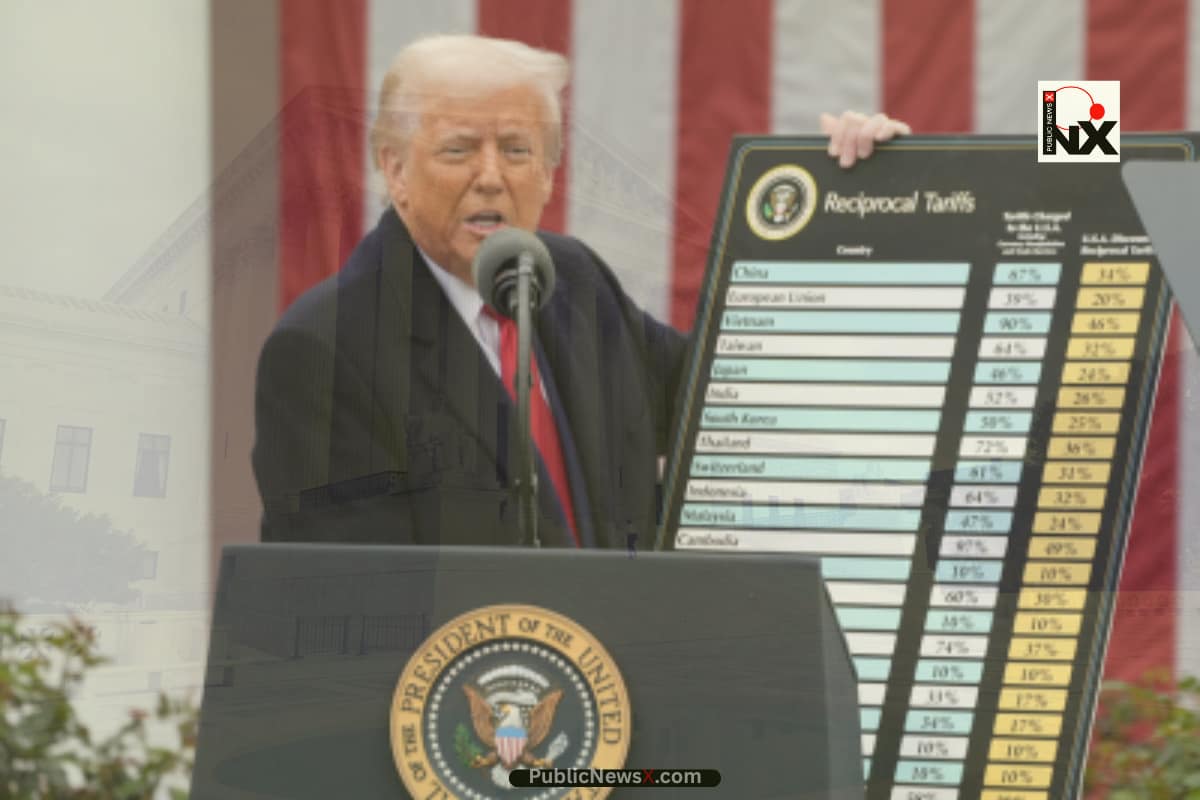
USA/New Delhi: In a landmark ruling, the U.S. Supreme Court declared most of the broad tariffs imposed by former President Donald Trump unlawful, voting 6–3 that he exceeded legal authority under the International Emergency Economic Powers Act (IEEPA).
The Court ruled that IEEPA, designed for targeted economic sanctions, does not authorize the President to impose sweeping tariffs on imports without explicit congressional approval.
Chief Justice John Roberts, writing for the majority, emphasized that tariff powers belong to Congress, and the President cannot bypass legislative authority using emergency powers. The decision reinforces the constitutional separation of powers and limits unilateral executive action on trade.
Trump’s tariffs, often called “reciprocal tariffs,” affected nearly all major U.S. trading partners, including Canada, China, Mexico, the EU, Brazil, and India. They were justified through emergency powers rather than standard trade statutes, a move that drew criticism for bypassing Congress and destabilizing global markets.
Critics warned that broad interpretation of IEEPA would grant unchecked executive control over economic policy, undermining constitutional design.
Economically, the ruling may trigger refunds of tariffs already collected, which could exceed $160 billion. This is expected to relieve some pressure on importers, exporters, and global supply chains. U.S. businesses and consumers may benefit from lower costs, while international markets anticipate reduced trade friction.
The decision does not affect tariffs imposed under other laws, such as Section 232 (national security) or Section 301 (unfair trade practices), which remain in effect. These include duties on steel, aluminum, and selected goods, continuing to shape U.S. trade policy.
Impact on India
For India, the ruling offers potential relief for exporters affected by Trump’s tariffs under IEEPA. Duties on sectors such as steel, aluminum, pharmaceuticals, auto components, textiles, and chemicals could now be withdrawn, improving price competitiveness in the U.S. market. However, tariffs under Section 232 and Section 301 continue to apply, so the overall impact depends on the legal basis of each duty.
The ruling also strengthens trade predictability, limiting sudden unilateral tariff threats by future presidents. Export-oriented economies like India could benefit from a more stable and legally predictable framework for U.S. trade policy, enhancing long-term investment and bilateral cooperation.
The Supreme Court’s verdict underscores the limits of executive power, reasserts congressional authority over taxation and tariffs, and reshapes a critical portion of U.S. trade policy.
Share this content:



Post Comment