US Ambassador Sergio Praises Modi-Trump Friendship for India-US Trade Deal 2026
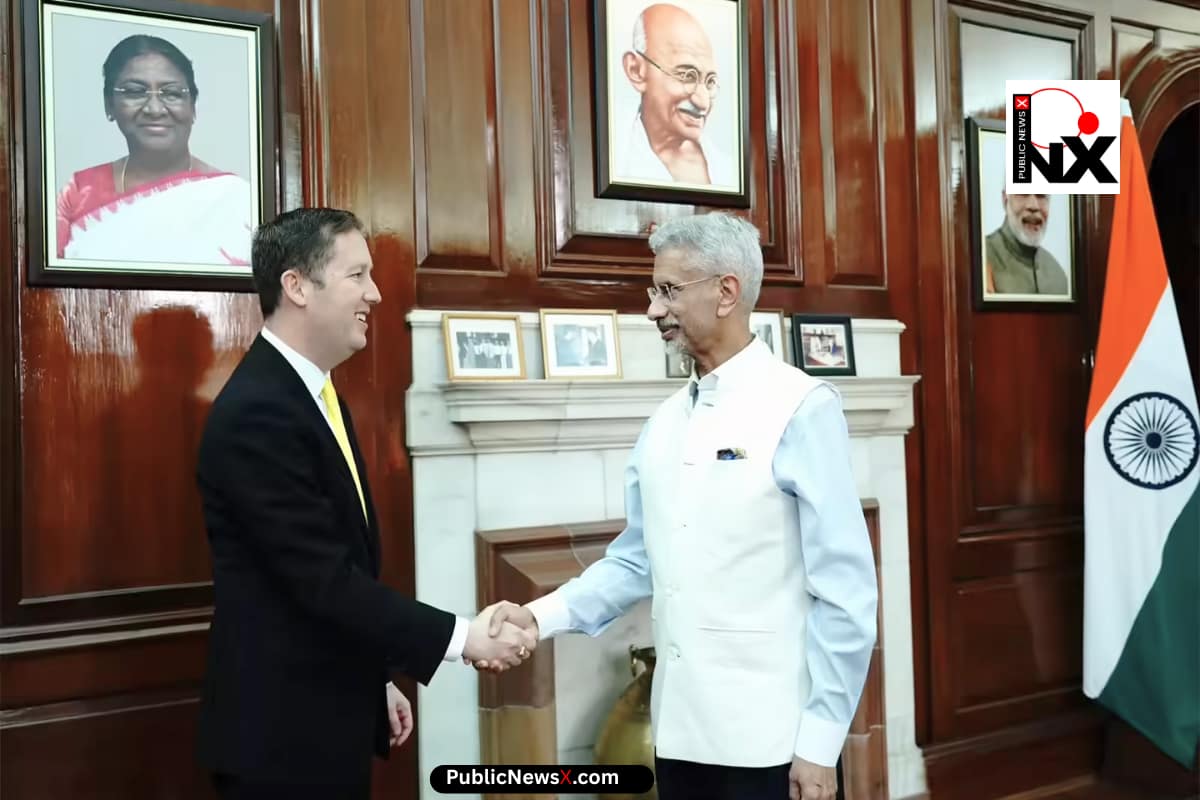
New Delhi: US Ambassador to India Sergio Gor hosted a glittering diplomatic reception at his residence in New Delhi on Tuesday evening. The event brought together Indian and US leaders, diplomats, business executives, and policy experts to mark a significant moment in India–US relations — the announcement of an interim trade agreement framework aimed at reducing tariffs and paving the way for a broader bilateral trade pact.
The reception was attended by India’s External Affairs Minister S. Jaishankar and Commerce Minister Piyush Goyal, alongside more than 75 key diplomats, corporate leaders, and American partners. The atmosphere reflected optimism about deepening economic ties between the two countries.
Ambassador Gor, who assumed his post in January 2026, underscored the strong personal bond between Prime Minister Narendra Modi and US President Donald Trump as a pivotal factor accelerating the trade negotiations. He said the White House was paying unprecedented attention to India and described the friendship between the two leaders as a “force multiplier” in bilateral cooperation. Gor stated that trust and personal diplomacy were driving momentum on issues ranging from trade to technology, semiconductors, and artificial intelligence.
Interim Trade Agreement and Economic Shift
Under the interim trade framework, reciprocal tariffs on certain goods will be reduced to 18 percent, replacing previously punitive rates that had reached higher levels following tariff disputes last year. The deal is designed to provide early market access benefits while establishing a foundation for a more comprehensive Bilateral Trade Agreement (BTA) expected by March 2026.
Indian officials told a parliamentary panel that this framework represented the most viable option in the current global environment marked by rising unilateral trade barriers and economic uncertainty. They emphasised that closer cooperation with the United States would offer strategic advantages and help build resilient supply chains.
Prime Minister Narendra Modi welcomed the agreement, saying it would strengthen India’s ‘Make in India’ initiative and build trusted supply chain partnerships, noting that reduced tariffs and increased collaboration would benefit Indian manufacturers and exporters. The joint statement following the deal also highlighted expanded investment and technology exchange between the two nations.
Opposition and Criticism in Parliament
The interim trade deal, however, has drawn sharp scrutiny from opposition leaders in India’s Parliament. Congress MP Shashi Tharoor delivered one of the most pointed critiques in the Lok Sabha during the Budget Session debate. He said, “It appears far less like a free trade agreement and far more like a pre-committed purchase agreement that overturns the very idea of reciprocity.”
Tharoor also questioned how India could speak of reciprocal tariffs when one side faces an 18 percent levy while India reportedly commits to near-zero tariffs on many US goods without securing proportionate market access. He warned that such arrangements risk converting India’s trade surplus into a long-term deficit driven by executive assurances rather than market dynamics.
Congress General Secretary Jairam Ramesh described the interim pact as a “coerced concession” and alleged that the United States had extracted more from India than it conceded, framing the agreement as a diplomatic setback rather than a win.
Rahul Gandhi, Leader of the Opposition in the Lok Sabha, criticised the hike in US tariffs on Indian exports which is now rising to 18 percent. He slams the deal “absurd” and accusing the government of undermining India’s economic interests by failing to negotiate better terms.
Samajwadi Party chief Akhilesh Yadav labelled the agreement one-sided, arguing it could harm Indian farmers and domestic industry and blunt the momentum of self-reliance initiatives.
Beyond national leaders, farm unions and industry groups have pledged protests, warning that increased access for certain US agricultural imports could undercut Indian producers, particularly in sensitive sectors like apples and edible oils.
Ruling Party and Government Defenses
In response, members of the ruling dispensation have defended the interim deal as strategically necessary and beneficial for India’s long-term growth. Punjab BJP President Sunil Jakhar lauded Prime Minister Modi’s leadership and stressed that the agreement opens American markets to Indian exports while safeguarding Indian agricultural interests. He dismissed opposition commentary as misleading and underscored the deal’s potential to create jobs and enhance economic opportunities.
Finance Minister Nirmala Sitharaman has expressed this optimism, calling the tariff reduction “good auguring” for India’s exports and noting that aligning US tariffs more closely with those faced by other Asian competitors would strengthen India’s competitiveness abroad.
US Perspective and Broader Geopolitical Milieu
From the American side, US negotiators have signalled that India remains a “tough but important partner,” with the trade discussions forming part of a broader strategy to diversify supply chains and counter geopolitical uncertainties. Past remarks by top US trade officials highlight that Washington views deeper trade ties with India as mutually beneficial and aligned with broader strategic interests.
The interim deal also reflects a geopolitical recalibration, especially in the context of global energy shifts including India’s reduction of Russian crude imports — and efforts by both nations to integrate economic and strategic cooperation more tightly.
Energy Realignment and Strategic Autonomy
For decades, Russia has been one of India’s most trusted strategic partners in the energy sector. While Russian crude accounted for a minimal share of India’s oil basket before 2022, the equation shifted dramatically after the Ukraine war, when India began importing discounted Russian oil in large volumes to shield its economy from global price shocks. At one point, Russian supplies made up nearly 40 percent of India’s total crude imports, reflecting a pragmatic energy strategy.
The new India-US trade understanding signals a subtle but significant recalibration. Washington has made clear its discomfort with continued purchases of Russian crude and had discussed imposing an additional 25 percent ad valorem tariff penalty linked to such imports. The recent easing of trade tensions has been viewed in some quarters as tied to India’s gradual reduction of Russian oil intake, aligning economic incentives with broader geopolitical objectives.
New Delhi, however, maintains that its energy decisions are guided by cost, reliability, and strategic autonomy rather than external pressure. The government’s position underscores diversification rather than alignment, even as global power equations evolve.
India balances its long-standing Russia energy partnership with expanding US trade and technology cooperation, the larger question persists, can India preserve its strategic independence while deepening economic integration with competing global powers?
Share this content:

Post Comment