Trump’s Tariff Relief Order Warns of 25% Reimposition if India Resumes Russian Oil Imports
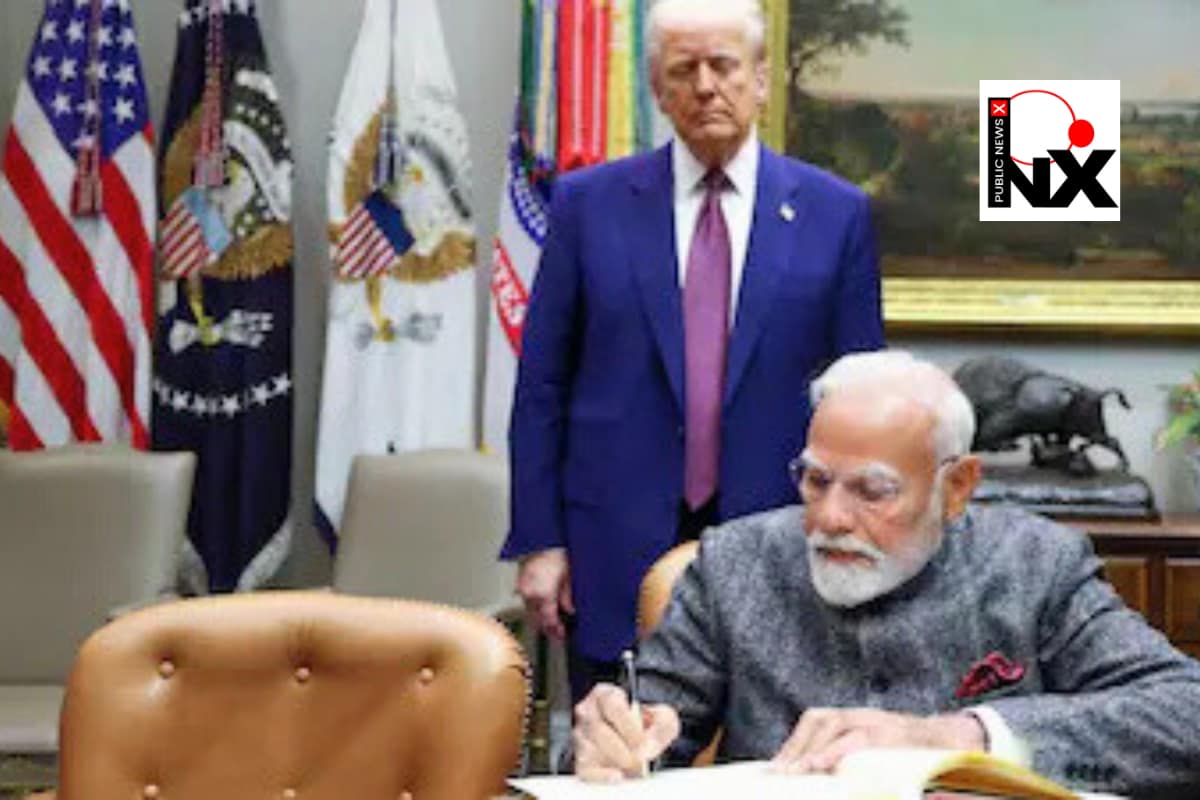
New Delhi / Washington: India-US agreed for an Interim Trade Agreement that marks a major step forward in long-running negotiations toward a broader Bilateral Trade Agreement (BTA).
The joint statement, released by the Press Information Bureau of India and supported by statements from the White House and US Commerce officials, calls the agreement a historic milestone in economic cooperation between the two democracies.
Economic Impact and Strategic Goods Commitment
A standout component of the agreement is India’s intention to purchase US goods worth $500 billion over the next five years. These purchases include energy products, aircraft and aircraft parts, precious metals, technology products and coking coal. Both countries also agreed to significantly increase trade in technology products such as graphics processing units used in data centres and expand cooperation in joint technology projects.
Officials on both sides framed the framework as a win for exporters, industries and workers.
Union Finance Minister Nirmala Sitharaman said the agreement demonstrates India’s commitment to deepening economic ties with the United States and reaffirmed the broader goal of concluding the BTA.
External Affairs Minister S. Jaishankar described it as a “mutually beneficial” breakthrough that will open new opportunities for Indian exporters. Meanwhile, Commerce and Industry Minister Piyush Goyal highlighted the potential benefits for MSMEs, farmers, fishermen, women and youth, saying the framework will build momentum toward a full trade deal.
Contrast with U.S. Unilateral Executive Order
President Trump’s separate Executive Order (“Modifying Duties to Address Threats to the United States by the Government of the Russian Federation,” issued February 6, 2026) explicitly ties the removal of the additional 25% punitive tariff (effective February 7, 2026) to India’s alleged commitment to “stop directly or indirectly importing Russian Federation oil,” alongside increased U.S. energy purchases and expanded defence cooperation.
The bilateral document avoids this topic, presenting the agreement as balanced and interest-based, while the U.S. executive action frames tariff relief as conditional on geopolitical alignment.
India’s Concessions:
- Elimination or reduction of tariffs on all U.S. industrial goods and a wide range of U.S. food/agricultural products (e.g., dried distillers’ grains (DDGs), red sorghum for animal feed, tree nuts, fresh/processed fruit, soybean oil, wine and spirits, and others).
- Addressing non-tariff barriers, including long-standing issues for U.S. medical devices, restrictive import licensing for ICT goods, and food/agricultural products.
- Intent to purchase $500 billion worth of U.S. energy products, aircraft/aircraft parts, precious metals, technology products (including GPUs for data centers), and coking coal over the next 5 years.
- Strengthening economic security alignment, supply chain resilience, cooperation on investment reviews/export controls, and digital trade rules/pathways in the BTA.
U.S. Concessions:
- Application of a reciprocal tariff rate of 18% (under Executive Order 14257 of April 2, 2025, as amended) on originating Indian goods in key sectors: textiles/apparel, leather/footwear, plastics/rubber, organic chemicals, home décor, artisanal products, and certain machinery.
- Removal of the reciprocal tariff (subject to finalization) on additional goods like generic pharmaceuticals, gems and diamonds, and aircraft parts (per Potential Tariff Adjustments for Aligned Partners Annex to Executive Order 14346 of September 5, 2025).
- Removal of certain national security-related tariffs (e.g., under Proclamations 9704/9705 on aluminum/steel, and 10962 on copper).
- Preferential tariff rate quota for Indian automotive parts (under Proclamation 9888 on automobiles/parts).
- Negotiated outcomes for generic pharmaceuticals/ingredients contingent on Section 232 investigation finding
Share this content:


Post Comment