Trump Board of Peace Triggers Global Debate on Legal Status, UN Authority
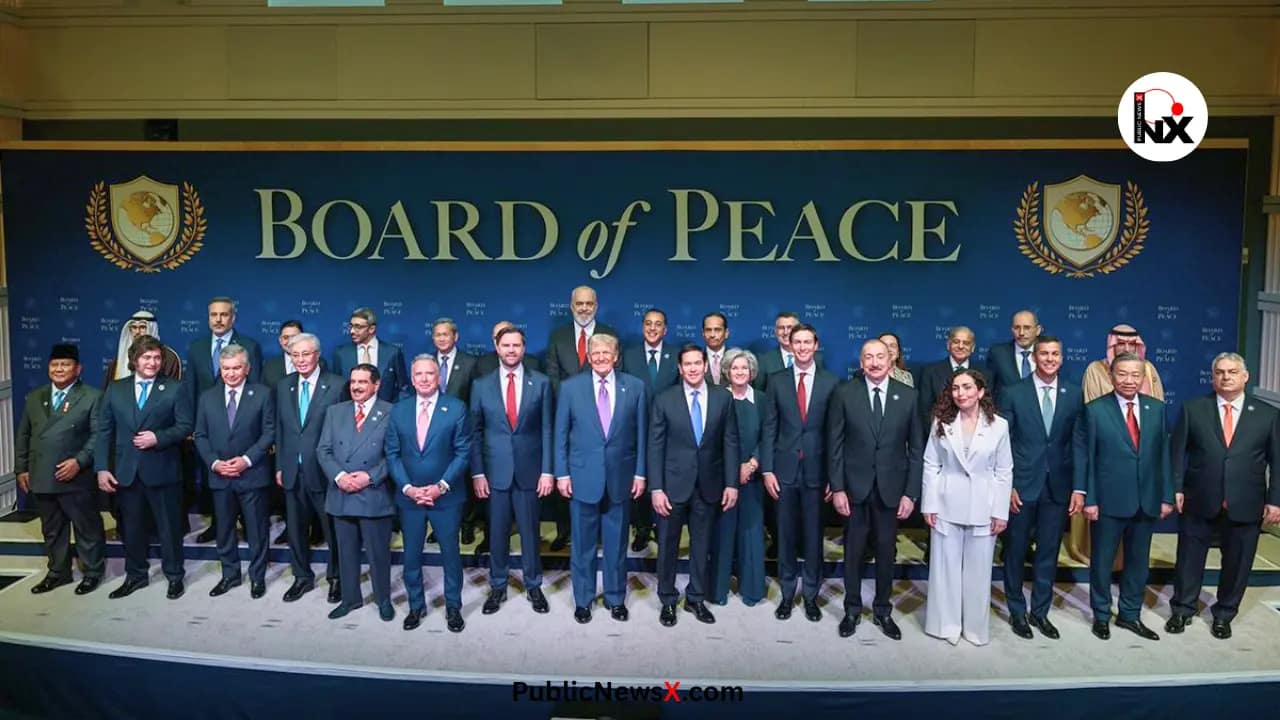
New Delhi: The “Board of Peace” announced by US President Donald Trump has triggered global debate after its first formal meeting in Washington this week. While the initiative is real and has been publicly convened, it is not a treaty-based international organization like the United Nations and does not currently hold the same legal standing under international law.
According to multiple international reports, the Board of Peace was introduced as a political initiative aimed at coordinating reconstruction and stabilization efforts in Gaza following the Israel-Hamas conflict. Its founding charter was reportedly signed earlier this year during the World Economic Forum, and more than 20 countries are said to have joined in some capacity.
Several Middle Eastern nations participated, while India attended the first meeting as an observer. Some Western countries have remained cautious and have not formally joined.
At its inaugural session, participating countries reportedly pledged billions of dollars toward reconstruction and humanitarian assistance. The United States announced a major financial commitment, and discussions included the possibility of a multinational stabilization force. However, there has been no confirmation that the body has been established through formal treaty ratification by the US Senate or equivalent legislative processes in other member states.
There is also no publicly verified evidence that the Board of Peace has been granted legal immunity under the International Organizations Immunities Act through an executive order, nor is there confirmation that it has any formal authority within the United Nations system.
The UN Charter does not contain provisions allowing an external body to oversee or supersede the organization. Any structural changes to the UN would require approval from member states through established procedures.
Legal experts note that international organizations typically derive their authority from multilateral treaties that are ratified by participating countries. The Board of Peace appears to function at this stage as a political coalition formed through executive-level agreements rather than a fully institutionalized global body with binding legal authority.
Critics have raised concerns about transparency, governance structure and long-term accountability, while supporters argue that the initiative could provide faster coordination in conflict recovery situations. As of now, there is no evidence that the Board of Peace has replaced, overridden or legally challenged the sovereignty of the United States or any other country.
The situation remains fluid, and further clarity is expected as participating governments release more official documentation regarding its structure, mandate and legal framework.
Share this content:

Post Comment