Trump Adds 10% Global Tariff On Top of Existing US Tariffs
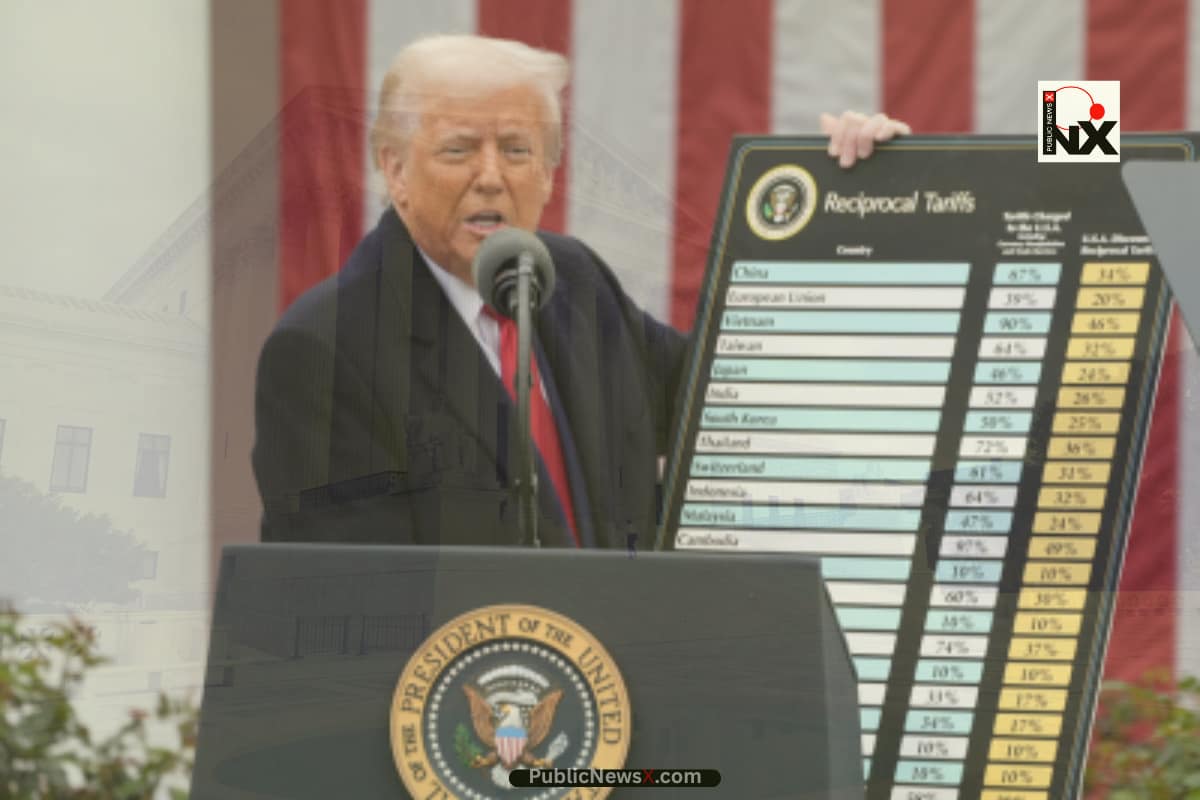
Washington, D.C./New Delhi: President Donald J. Trump signed an executive order on Friday imposing a sweeping 10% global tariff on all imports entering the United States effective immediately in a bold and legally untested countermove hours after the Supreme Court struck down his previous tariff regime as unconstitutional.
The new levy, stacked on top of existing duties already in place, signals that the administration has no intention of retreating from its aggressive trade posture despite the Court’s landmark 6-3 ruling earlier in the day.
Speaking at the White House press briefing, Trump made clear the Supreme Court’s decision would not blunt his trade agenda. “Effective immediately, all National Security Tariffs, Section 232 and existing Section 301 Tariffs, remain in place and in full force and effect,” Trump declared. “Today I will sign an Order to impose a 10% Global Tariff, under Section 122, over and above our normal tariffs already being charged.”
The legal foundation for the new tariff is Section 122 of the Trade Act of 1974, a relatively obscure and rarely used provision that grants the President authority to impose temporary import surcharges of up to 15% for up to 150 days to address serious balance-of-payments deficits or to prevent a significant depreciation of the U.S. dollar.
This marks one of the broadest uses of Section 122 in American history. With the order signed today, the clock expires around mid-July 2026, at which point the tariff would lapse unless Congress votes to extend it or the administration finds yet another legal vehicle.
The 10% global tariff is additive, meaning it applies on top of all existing import duties. America’s standard Most Favored Nation base rates, combined with any applicable Section 232 duties on steel, aluminum, and semiconductors, and Section 301 duties on Chinese goods now carry an additional 10% surcharge on top.
Treasury Secretary Scott Bessent framed the move as a seamless transition, saying the administration’s use of alternative tariff authorities would result in virtually unchanged tariff revenue in 2026. Administration officials described the measure as a bridge while longer-term actions, including fresh investigations under Section 301 targeting unfair foreign trading practices, are pursued.
Financial markets responded with sharp volatility. Stocks swung erratically following the twin announcements, with an initial relief rally on the Supreme Court ruling quickly giving way to renewed anxiety as the new tariff order was confirmed.
The U.S. dollar weakened against major currencies as traders attempted to price in the new trade landscape. The cumulative weight of duties now applied to virtually all foreign imports raised concerns that consumer prices could rise broadly across electronics, automobiles, clothing, and household goods.
The announcement triggered immediate alarm among America’s largest trading partners. Diplomatic sources in Brussels, Beijing, Ottawa, and Mexico City indicated that retaliatory measures are under active consideration.
China, already subject to the highest existing duties under Section 301, is expected to respond with targeted measures against American agricultural exports and technology firms.
The European Union signaled it would evaluate legal options under World Trade Organization frameworks, while Canada and Mexico expressed concern over whether the new tariff constitutes a violation of treaty obligations under the United States-Mexico-Canada Agreement.
Trump brushed aside retaliation threats, telling reporters other countries had been “dancing in the street” over the Supreme Court ruling. “They won’t be dancing for long,” he said.
Constitutional law experts widely expect Section 122 to face swift legal challenges. The provision was designed for narrow balance-of-payments emergencies and courts will scrutinize whether the administration can credibly claim the statutory conditions are met.
The administration has signaled it is simultaneously pursuing new Section 301 investigations and consulting with Congress on longer-term legislative solutions, aware that Section 122 alone cannot sustain a permanent global tariff regime.
Friday, February 20, 2026 will be remembered as one of the most turbulent days in modern American trade policy. Within the span of a single afternoon, the Supreme Court dismantled the legal architecture underpinning trillions of dollars in tariff authority and the President responded by immediately erecting a new one.
Whether Section 122 survives judicial scrutiny, and whether Congress moves to extend or codify the new tariff beyond mid-July, will define the next chapter of America’s ongoing trade wars.
Share this content:


Post Comment