TDB Backs Biovet to Manufacture Veterinary Hormones in India
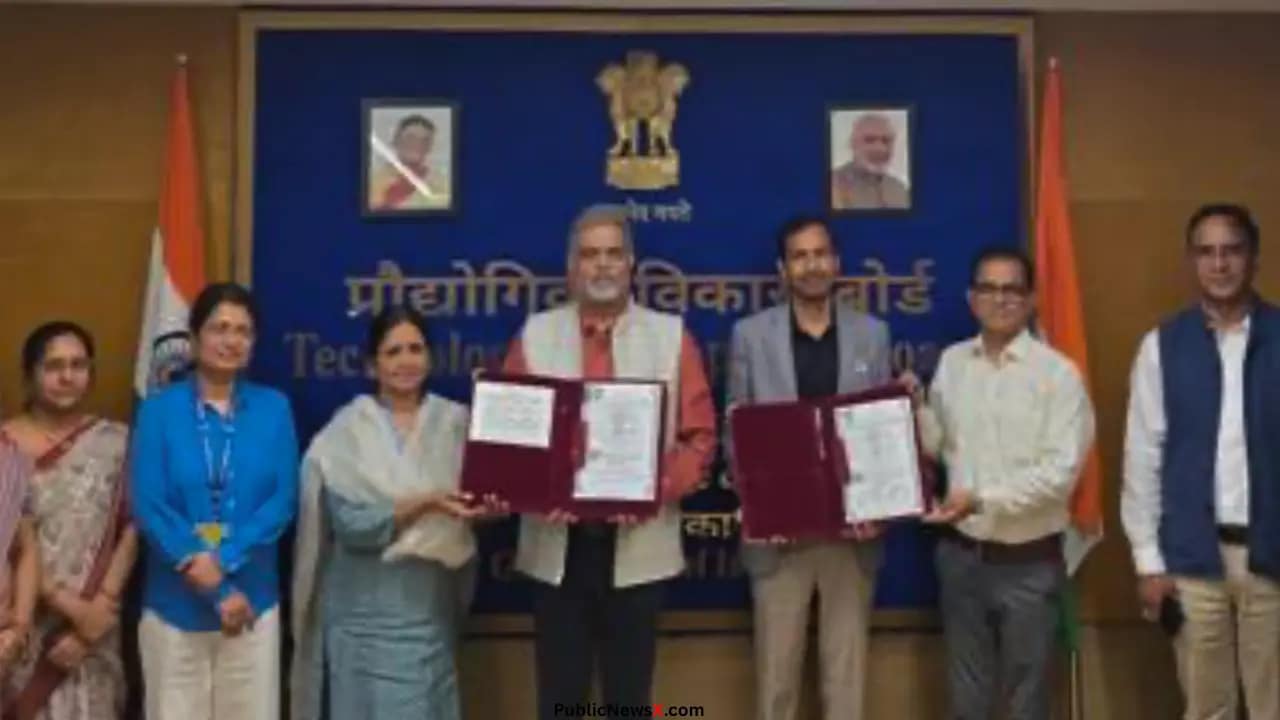
New Delhi: In India’s animal healthcare industry, the Technology Development Board under the Department of Science & Technology has sanctioned financial assistance to Karnataka-based Biovet Private Limited for the commercial production of critical veterinary reproductive hormones.
Veterinary hormones will be manufacture in India for the first time at a commercial scale. This marks a decisive step toward reducing import dependence in the livestock sector.
The project focuses on producing GnRH analogues Gonadorelin and Buserelin acetate along with the prostaglandin analogue Cloprostenol.
Cattle and buffalo reproductive management will be harness by these harmones. They improve conception rates and milk productivity. They help farmers plan breeding cycles with precision.
India has one of the world’s largest livestock populations, with more than 535 million animals contributing nearly 4.5 percent to GDP. Yet the country has relied heavily on imported veterinary reproductive hormones for decades.
These imports have primarily come from Europe, China and the United States. Prices remained high. Supply chains remained vulnerable.
During the COVID-19 pandemic, global disruptions exposed this weakness. Farmers faced shortages. Veterinarians had limited alternatives.
Hormone costs are expected to decline. Supply stability will improve. Access for small and marginal farmers will expand.
Modern dairy and livestock productivity depends on scientific reproductive management. These hormones form the backbone of that system.
Gonadorelin and Buserelin acetate are synthetic versions of Gonadotropin-Releasing Hormone and regulate ovulation, treat cystic ovarian disease and enable timed artificial insemination. Farmers can reduce calving intervals. Milk output improves. Herd productivity rises.
Cloprostenol plays a critical role by inducing luteolysis and synchronising estrous cycles. It supports globally adopted reproductive protocols such as Ovsynch and Co-Synch. Together, these hormones make breeding predictable. They make dairy operations more efficient. They increase farmer income.
Countries that invested early in veterinary hormone manufacturing now dominate global supply. In the United States, companies such as Zoetis and Merck Animal Health built strong domestic production systems integrated with dairy networks.
In Europe, firms like MSD Animal Health and Ceva Santé Animale developed export-oriented capabilities and influenced global pricing benchmarks.
China invested heavily in veterinary Active Pharmaceutical Ingredient manufacturing during the 1990s and 2000s. Today it is one of the world’s largest exporters of GnRH analogues. India, despite being a global leader in human pharmaceuticals, lagged in veterinary hormone production.
That gap is now narrowing.
Biovet Private Limited already has expertise in animal biologicals and vaccines. The company will now expand into hormone synthesis and formulation with dedicated infrastructure. Commercial-scale manufacturing will be enabled.
Peptide synthesis technology has matured significantly over the last two decades, making production more efficient and scalable. TDB’s financial backing bridges the gap between laboratory capability and full-scale industrial output.
The economic impact will be felt at multiple levels. Farmers will benefit first as lower hormone prices make advanced reproductive protocols accessible beyond large commercial dairies.
Foreign exchange outflow is expected to decline as imports are substituted with domestic production. Over time, export potential may emerge as global demand for veterinary hormones expands across Asia, Africa and Latin America.
Share this content:




Post Comment