Supreme Court Upholds Ban on Daily Namaz at Thirupparankundram
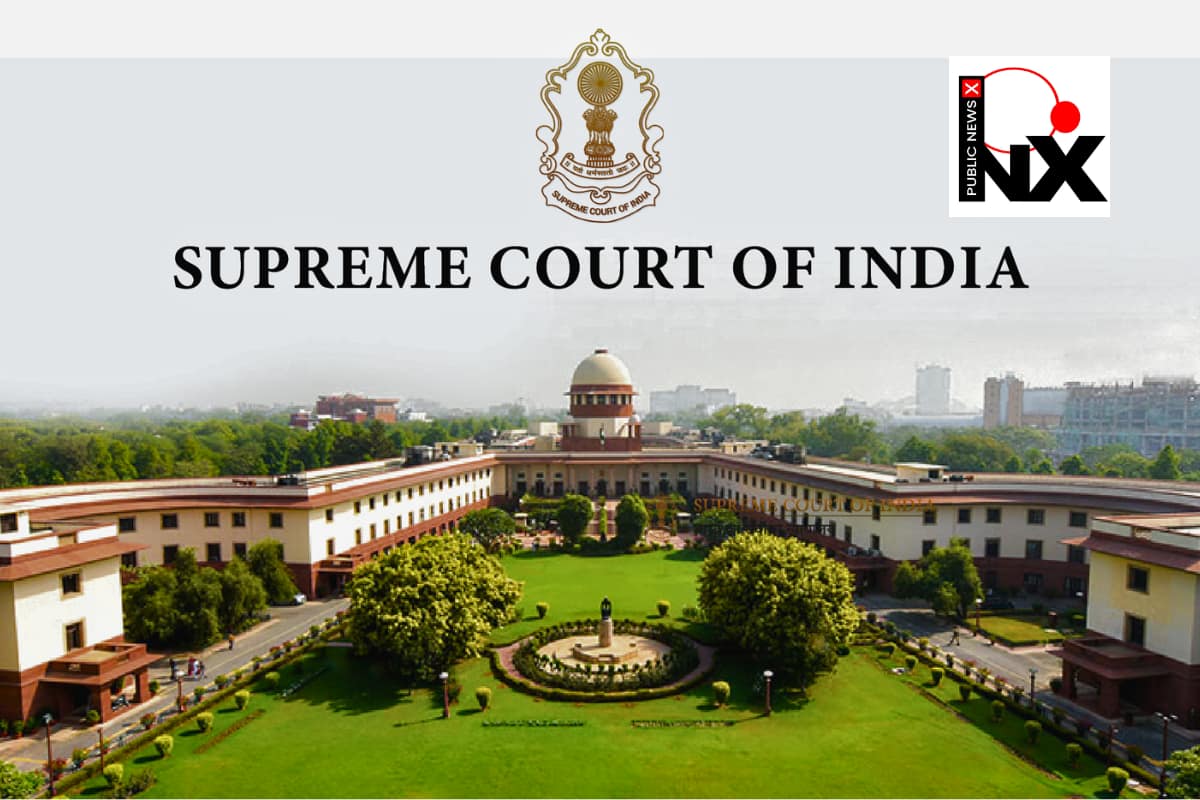
New Delhi: The Supreme Court of India upholds the Madras High Court’s judgment in the long-standing Thirupparankundram Deepam row dispute.
Muslims cannot offer daily namaz at the Sikkandar Badhusha Avuliya Dargah (located in the Nellithoppu area atop Thirupparankundram hill in Madurai, Tamil Nadu). The court permits prayers only during Ramzan and Bakrid.
It maintains the prohibition on animal sacrifice within the premises. The apex court describes the Madras High Court’s order as a “very balanced” or “very, very balanced” decision, refusing to interfere with it.
Thirupparankundram hill holds deep multi-religious significance. It hosts the ancient Arulmigu Subramaniya Swamy Temple (one of the six abodes of Lord Murugan) at its base, ancient Jain caves, the Kasi Viswanathar shrine, and the 13th 4th-century Sikkandar Badhusha Dargah near the summit.
The dargah commemorates Sikandar Badusha (also known as Sultan Sikandar Shah or a Sufi figure/warlord associated with the Madurai Sultanate era), with the site existing since at least the 13th century and rebuilt in the 19th century.
Disputes over the hill date back over a century. In 1920, the temple authorities filed a suit (O.S. No. 4 of 1920) claiming ownership of the entire hill after dargah caretakers attempted construction in Nellithoppu.
A 1923 trial court decree awarded the temple most of the hill “from time immemorial,” except for about 33 cents in Nellithoppu attached to the dargah (confirmed by the Privy Council in 1931). Later suits (e.g., 1958) addressed quarrying and encroachments but reinforced temple primacy over the broader hill.
Tensions escalated in recent years (particularly from 2023–2025) amid claims of attempts to rename the hill “Sikkandar Malai,” allow animal sacrifice at the dargah, or expand Muslim practices. Hindu groups protested alleged encroachments, while dargah representatives asserted minority rights over their land portions.
The immediate trigger for recent litigation involved the Karthigai Deepam festival (lighting a ceremonial lamp at the “Deepathoon” stone pillar atop the hill).
In December 2025, single-judge orders (e.g., by Justice G.R. Swaminathan) permitted the temple to light the lamp, rejecting state law-and-order fears as speculative. Division benches upheld this in January 2026, imposing conditions like ASI/police consultation.
Parallel proceedings addressed dargah practices. The Madras High Court (in split verdicts resolved by a third judge in October 2025) upheld the hill’s name as Thirupparankundram, banned animal sacrifice (deeming it non-essential under Article 25 and restricted due to ASI protections), and limited Muslim prayers at Nellithoppu to Ramzan and Bakrid only no daily namaz.
An appeal against the Madras HC restrictions reached the Supreme Court. On February 9, 2026 (Bench: Justices Aravind Kumar and P.B. Varale), the apex court declined to interfere, affirming the High Court’s findings without opining further on party rights.
This ruling promotes coexistence on a shared sacred site while enforcing historical ownership, statutory limits (e.g., ASI monument status), and constitutional balancing of religious freedoms with public order.
Share this content:

Post Comment