Senior Hamas Leader Khaled Meshal Rejects Disarmament and Foreign Intervention in Gaza
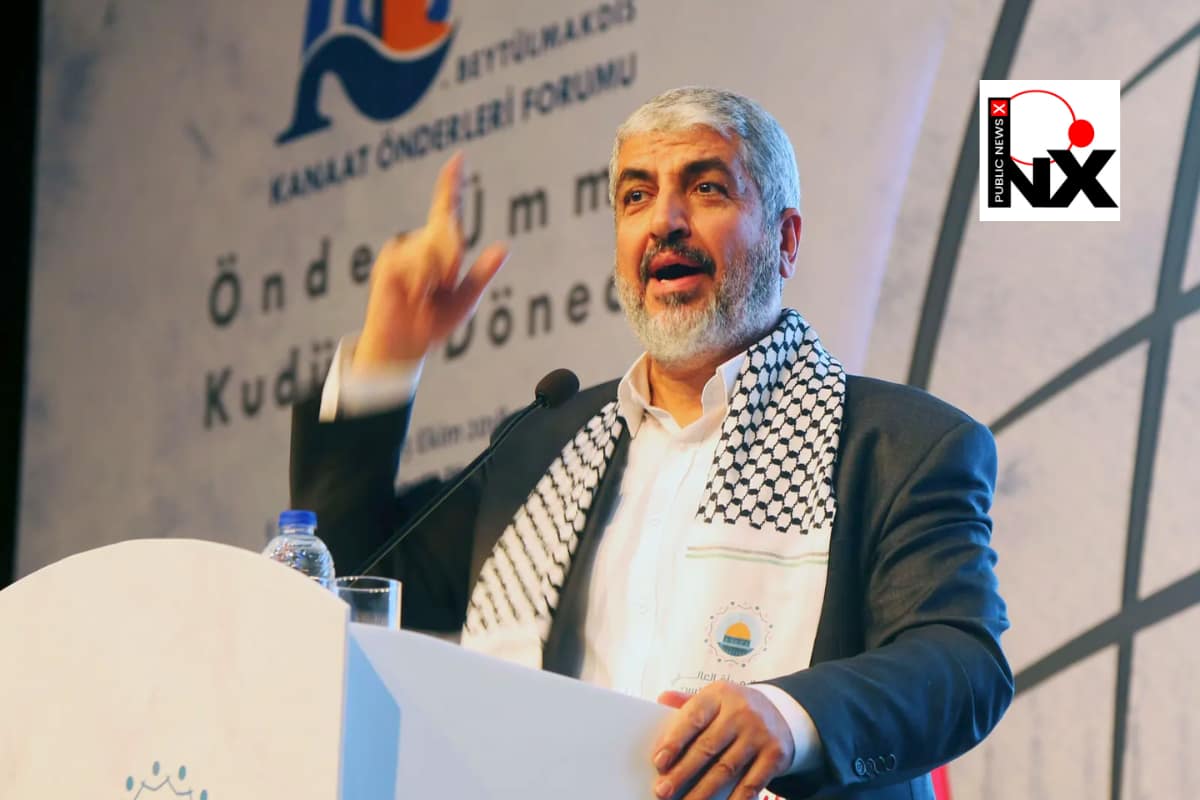
Doha, Qatar/ New Delhi: Senior Hamas leader Khaled Meshal firmly rejected demands for the group to surrender its weapons or accept any form of foreign intervention in Gaza. Pushing back against pressure from the USA and Israel amid ongoing ceasefire implementation.
Speaking at the 17th Al Jazeera Forum in Doha on Sunday, Meshal described calls to disarm Palestinian factions as an unacceptable attempt to “criminalize the resistance” while occupation continues.
“Criminalising the resistance, its weapons, and those who carried it out is something we should not accept.” – Hamas Leader Khaled Meshal
“In the context that our people are still under occupation, talking about disarmament is an attempt to make our people an easy victim to be eliminated and easily exterminated by Israel, which is armed with all international weaponry.” – Hamas Leader Khaled Meshal
“We adhere to our national principles and reject the logic of guardianship, external intervention, or the return of a mandate in any form.” – Hamas Leader Khaled Meshal
“Palestinians are to govern Palestinians. Gaza belongs to the people of Gaza and to Palestine. We will not accept foreign rule.” – Hamas Leader Khaled Meshal
Meshal emphasized that resistance remains a right for occupied peoples and urged a “balanced approach” to Gaza’s reconstruction and aid delivery without external governance.
The statements come as the U.S.-backed ceasefire phases face challenges over Hamas’s disarmament and Gaza’s future administration.
The Israel-Hamas confrontation escalated dramatically on October 7, 2023, when Hamas launched a surprise attack from Gaza into southern Israel, killing over 1,200 people and taking 251 hostages.
Israel responded by declaring war and launching a major military offensive in Gaza, resulting in tens of thousands of Palestinian deaths (over 41,000 reported by Gaza health authorities), widespread displacement of nearly 90% of Gaza’s 2.3 million residents, and severe humanitarian crises including famine risks and infrastructure destruction.
Multiple short ceasefires occurred, but fighting continued through 2024 and into 2025 with operations in areas like Khan Younis, Rafah, and northern Gaza.
In October 2025, a U.S.-mediated peace plan led to a formal ceasefire, hostage releases, prisoner exchanges, and partial Israeli troop withdrawals, though core issues like full disarmament, governance of Gaza, and long-term Palestinian statehood remain unresolved amid mutual distrust and ongoing tensions.
Share this content:


Post Comment