India AI Summit 2026: BHASHINI division unveils Policy Report, Toolkit To Power Responsible Voice Technology
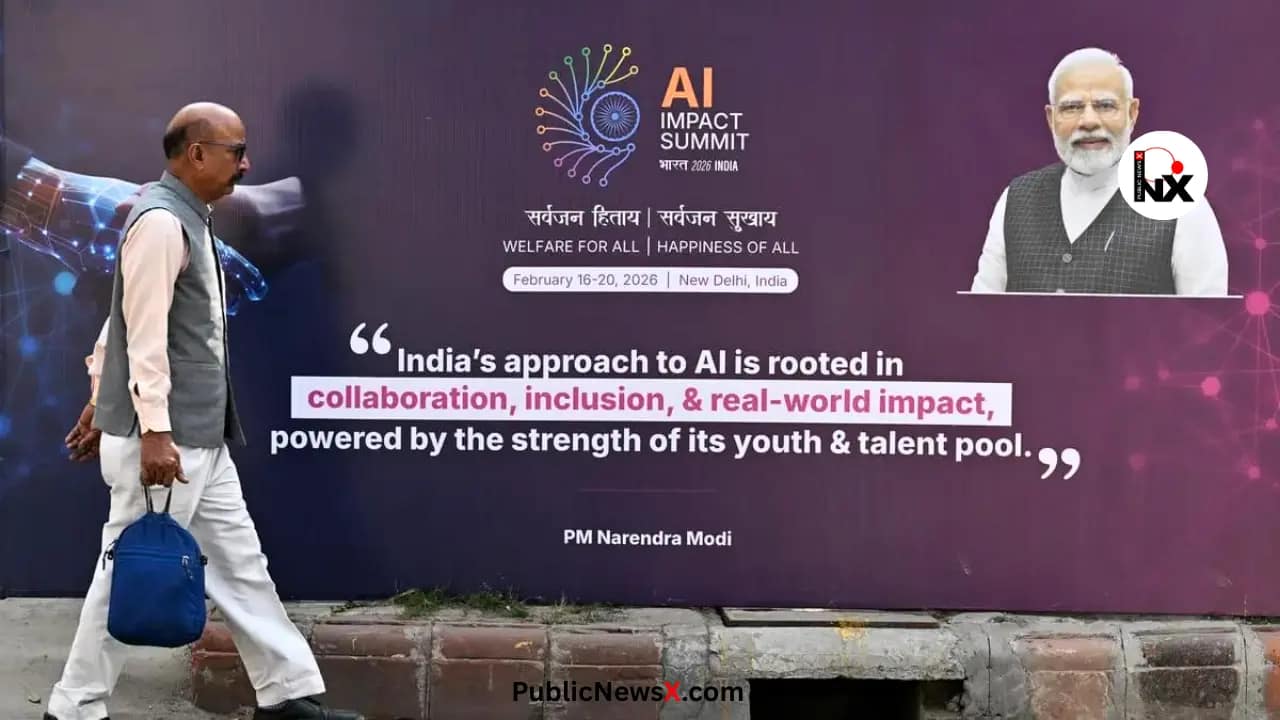
NEW DELHI: A compendious developer’s guide aimed at building inclusive, multilingual voice technologies was unveiled at the India AI Summit 2026, positioning speech-based artificial intelligence as central to expanding digital access across India’s diverse socio-political milieu.
Policy report titled “Indic Voice Technologies for an Inclusive Digital India: Toolkit for Developers,” the guide was developed collaboratively by Bhashini, GIZ under its FAIR Forward initiative, ARTPARK at the Indian Institute of Science, Digital Futures Lab, and Trilegal, with NASSCOM serving as industry adviser.
The toolkit argues that the main bottleneck in Indian speech and language AI is no longer a lack of innovation but persistent structural gaps in data representation, quality assurance, evaluation, and governance. It emphasizes that voice technology can help overcome literacy barriers and enable broader participation in digital services.
The report notes that many open-source speech datasets are really skewed toward young, urban, and educated speakers, leaving rural communities and low-resource languages underrepresented. To address this, the toolkit recommends that developers define clear demographic, geographic, and linguistic targets at the outset of data collection to ensure equitable representation.
It outlines strategies to manage code-mixing, coarticulation variability, tonal differences, and the challenges posed by purely oral languages without standardised scripts in a country with more than 19,500 mother tongues. It also advises combining 70% to 80% generic foundational datasets with 20% to 30% domain-specific data, such as agriculture or health care terminology, and supplementing with synthetic data for rare words or phrases.
The report warns that deploying AI systems in India requires specialized tools and strict quality control to function in noisy environments and on low-end devices. It encourages developers to adopt transparent documentation practices through the use of “Datacards” detailing dataset origins, demographic breakdowns, recording conditions, and ethical limitations, alongside “Model Cards” disclosing performance across Indian accents and dialects.
The toolkit argues that standard metrics such as word error rate may not capture performance accurately in multilingual, code-switching contexts and recommends complementary measures such as intent accuracy and answer error rate to assess real-world utility. To address poor connectivity, it suggests hybrid offline-online systems and low-latency speech-to-speech architectures tailored for edge devices.
A central pillar of the toolkit is the integration of responsible AI practices throughout the development lifecycle. It provides guidance on complying with India’s Digital Personal Data Protection Act, 2023, requiring explicit and granular consent for voice data collection, and clarifies copyright considerations under the Indian Copyright Act, 1957, distinguishing between intellectual property rights in transcripts and audio recordings.
The toolkit condemns extractive data practices in which speech data is collected from low-resource communities without reciprocal benefit and calls for sustained engagement with language communities and benefit-sharing approaches.
It further recommends tiered open-source licensing frameworks and appropriate terms of use, including Creative Commons-style licenses, to protect privacy while enabling ecosystem growth.
Share this content:


Post Comment