India AI Impact Summit 2026: New Delhi Declaration Adopted; 88 Global Countries endorse
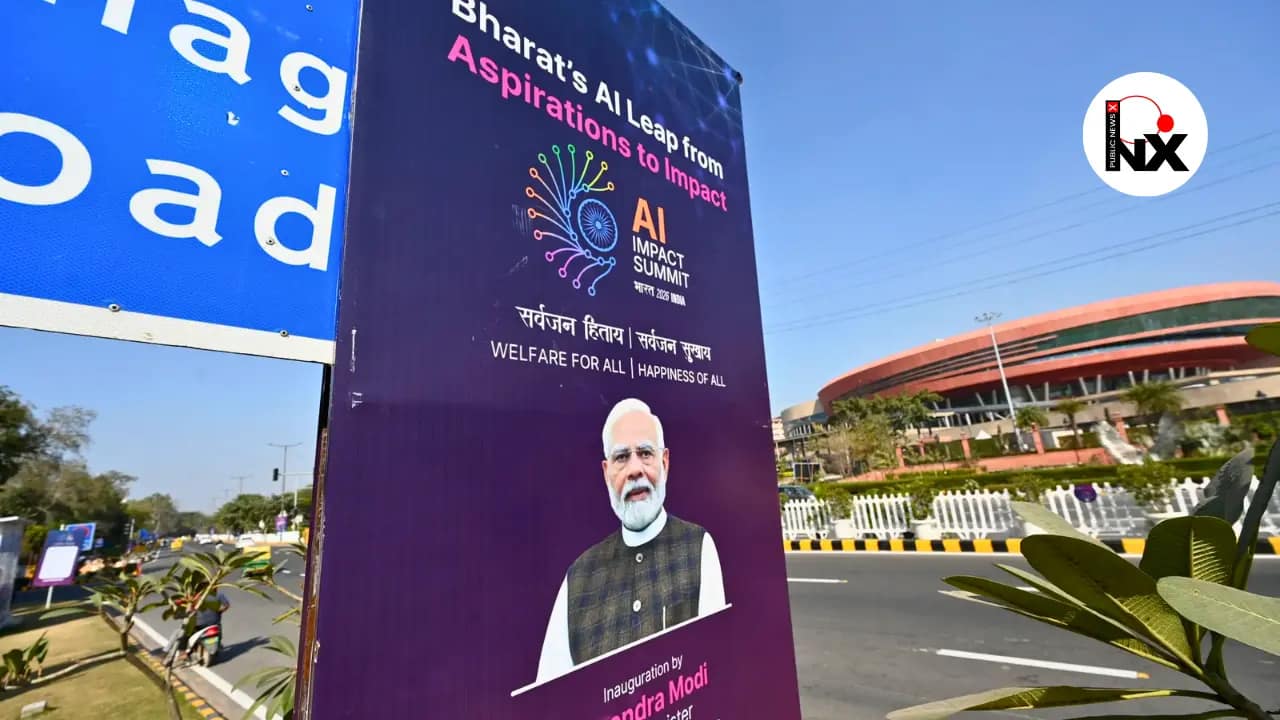
New Delhi: The AI Impact Summit 2026, hosted in New Delhi on February 18-19, concluded with the adoption of the New Delhi Declaration on AI Impact, marking a landmark moment in international cooperation on artificial intelligence. The Declaration has been endorsed by 88 countries and international organisations.
Summit was guided by the Sanskrit principle “Sarvajan Hitaya, Sarvajan Sukhaya,” meaning “Welfare for all, Happiness for all.” The Declaration underscores that the benefits of artificial intelligence must be equitably shared across humanity. It emphasizes strengthening international cooperation and multi-stakeholder engagement, respecting national sovereignty, and advancing AI through accessible and trustworthy frameworks.
The Declaration is structured around seven key pillars, referred to as “Chakras,” forming the foundation of global AI cooperation. These are democratizing AI resources, economic growth and social good, secure and trusted AI; AI for science, access for social empowerment, human capital development, and resilient, efficient, and innovative AI systems.
Each pillar is accompanied by a concrete deliverable. The Charter for the Democratic Diffusion of AI promotes affordable access to foundational AI resources and supports locally relevant innovation ecosystems.
The Global AI Impact Commons provides a platform to scale and replicate AI use cases across regions. The Trusted AI Commons serves as a repository of tools, benchmarks, and best practices for secure and trustworthy AI development.
An International Network of AI for Science Institutions will facilitate global scientific collaboration, while an AI for Social Empowerment Platform will enable knowledge exchange focused on equitable AI adoption.
An AI Workforce Development Playbook and re-skilling principles have also been introduced to prepare nations for an AI-driven economy. Finally, guiding principles on resilient and efficient AI, supported by a playbook on AI infrastructure resilience, round out the seven deliverables.
Importantly, all frameworks adopted under the Declaration are voluntary and non-binding in nature, reflecting the political diversity of the 88 endorsing nations, which include major economies such as the United States, China, Russia, the United Kingdom, the European Union, India, Japan, and Brazil, alongside numerous developing nations across Africa, Asia, and Latin America.
The Declaration also highlights the role of open-source and accessible AI ecosystems, the need for energy-efficient AI infrastructure, and the importance of expanding AI’s role in science, governance, and public service delivery.
Share this content:




Post Comment