
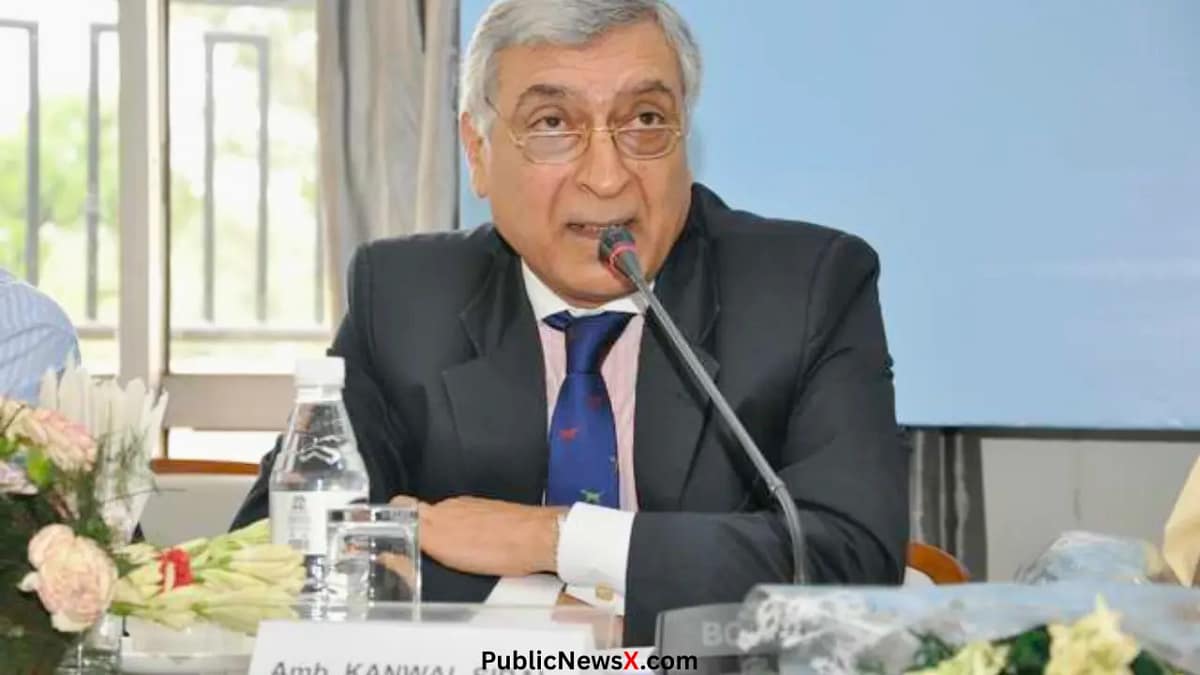
New Delhi: Former Indian Foreign Secretary Kanwal Sibal has said that the world is witnessing a “huge vacuum in global leadership”, warning that the absence of decisive and responsible leadership among major powers is worsening global instability.
Speaking recently in a discussion on global affairs, Sibal argued that the international system is currently facing multiple overlapping crises from wars and geopolitical rivalries to economic uncertainty without the presence of strong global leadership capable of stabilising the situation.
Global crises without coordinated leadership
Sibal pointed to the continuing Russia–Ukraine War as one of the major factors shaping global geopolitics. According to him, the conflict has deepened divisions between Russia and Western powers while exposing the limitations of diplomacy in resolving major international disputes.
He said the rhetoric emerging from some European capitals toward Russia has become increasingly aggressive, reflecting what he described as a “developing sense of desperation.” Such language, he warned, could push the geopolitical environment closer to a point of no return, where diplomatic flexibility becomes politically difficult.
Sibal cautioned that once political narratives harden and adversaries are excessively demonised, it becomes harder for governments to pursue compromise or negotiated solutions.
The former diplomat also highlighted a broader structural shift in international politics. According to him, the world is moving toward a fragmented and contested multipolar order, where major powers increasingly pursue competing strategic agendas rather than cooperative solutions.
He noted that institutions that once played a stabilising role in global governance are under strain. Multilateral mechanisms such as the United Nations and global forums are struggling to produce consensus on major geopolitical issues, while strategic rivalry between the United States, China and Russia continues to intensify.
According to Sibal, this combination of rivalry and weak multilateral leadership has created a situation where major global crises remain unresolved for longer periods, increasing uncertainty across regions.
Sibal stressed that the consequences of geopolitical confrontation are not limited to major powers. Countries in the Global South, including India are also affected through disruptions in energy markets, supply chains and international trade.
He pointed out that prolonged geopolitical tensions can lead to higher energy prices, economic volatility and supply disruptions, which disproportionately affect developing economies.
For countries like India, he suggested, maintaining strategic autonomy and diversified partnerships becomes even more important in an increasingly polarised global system.
Sibal concluded that the present moment calls for responsible leadership and stronger diplomatic engagement among major powers to prevent further fragmentation of the international system.
Without constructive dialogue and pragmatic diplomacy, he warned, the global order could become more unstable, more divided and less capable of resolving crises, reinforcing what he described as the current vacuum in global leadership.
Share this content: