Engine Supply Bottleneck Delays Arjun Mk1A Tank Induction Programme
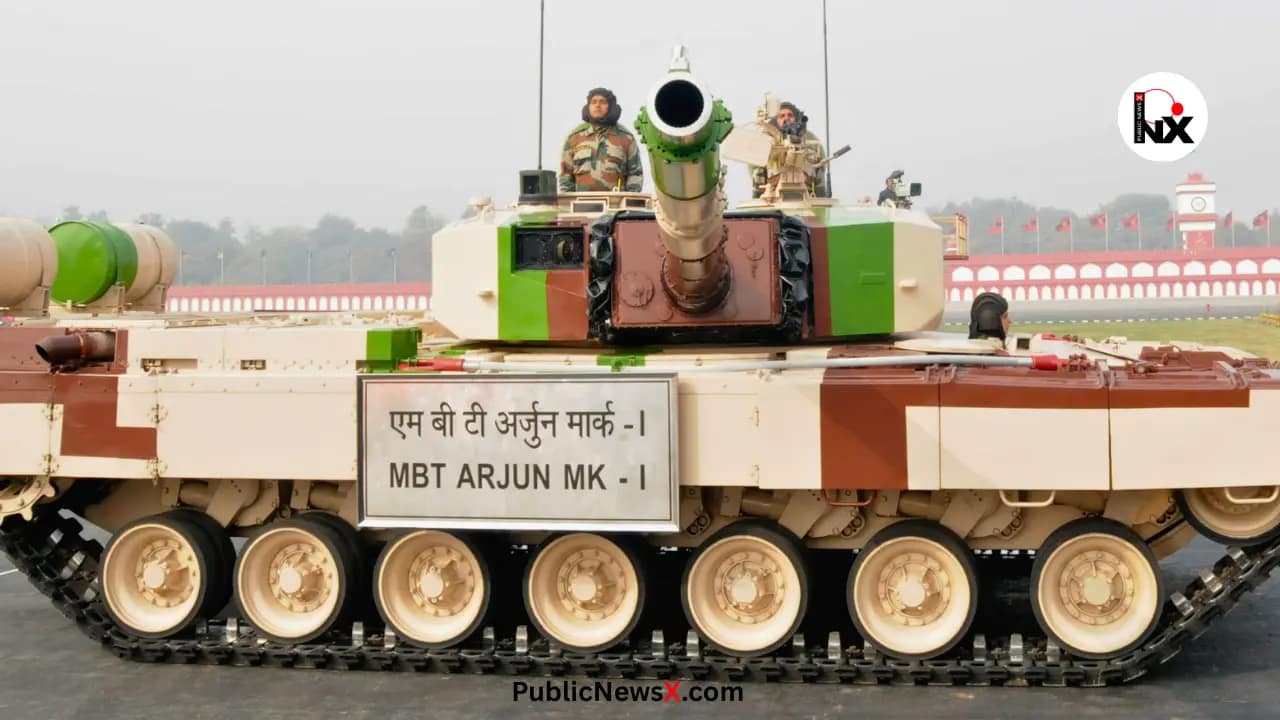
New Delhi: Engine supply constraints continue to delay the induction schedule of the Arjun Mk1A main battle tank programme as the Indian Army and defence planners work to resolve the powerpack development challenge.
The 118-tank contract was signed in September 2021 at a cost of approximately ₹7,523 crore, with initial plans to begin deliveries within about 30 months and complete production by 2027. However, the schedule has slipped due to technical and supply chain issues related to the tank’s propulsion system.
The Arjun Mk1A was originally designed around the German MTU MB 838 Ka-501 diesel engine supplied by MTU Friedrichshafen, a company that has discontinued production of this legacy powerpack.
Open-source defence reporting suggests that restarting the production line exclusively for the Indian order would be commercially difficult for the manufacturer and could require several years of lead time. Since the main battle tank cannot be fully assembled or undergo certification without its engine installed, the shortage has directly affected large-scale delivery.
The engine issue has pushed India toward indigenous propulsion development under the Defence Research and Development Organisation’s Combat Vehicles Research and Development Establishment. One of the key projects under evaluation is the experimental DATRAN-class 1500 horsepower engine being developed for future armoured vehicle applications.
Defence researchers hope that successful validation of domestic powerpack technology will reduce reliance on foreign suppliers and strengthen long-term manufacturing autonomy in the heavy armour segment.
However, integrating a new engine into an existing tank design is technically complex. Replacing the propulsion system would require structural adjustments inside the chassis, modifications in cooling architecture, transmission compatibility testing and complete mobility certification trials before operational clearance can be granted.
Defence observers says that full validation of alternative engine pathways may still require several more years depending on development progress and testing outcomes.
The production delay has also influenced broader armoured modernisation planning for the Indian Army. While legacy platforms such as the T-90 series continue to be deployed and expanded, the indigenous heavy tank programme remains in a transitional development phase.
Defence analysts also noted that the Arjun Mk1A programme illustrates the strategic challenge of designing advanced military platforms around subsystems that may be discontinued by foreign manufacturers.
The Ministry of Defence has maintained that the programme has not been cancelled and remains under technical evaluation. Work is continuing on indigenous engine development and possible integration strategies that could support long-term production stability.
Some defence community reports suggest that if certification and supply issues are resolved, the first operational batch of Arjun Mk1A tanks could enter service in the early 2030s, although official timelines have not been confirmed.
The engine transition also reflects India’s larger push toward self-reliant defence manufacturing. Successful development of a domestic powerpack would provide not only a solution for the Arjun programme but also create a technological foundation for future indigenous armoured vehicle designs.
As of 2026, the Arjun Mk1A programme continues to progress through development and evaluation stages, with resolution of the propulsion system challenge remaining the most critical factor determining the tank’s large-scale induction schedule.
Share this content:

Post Comment