
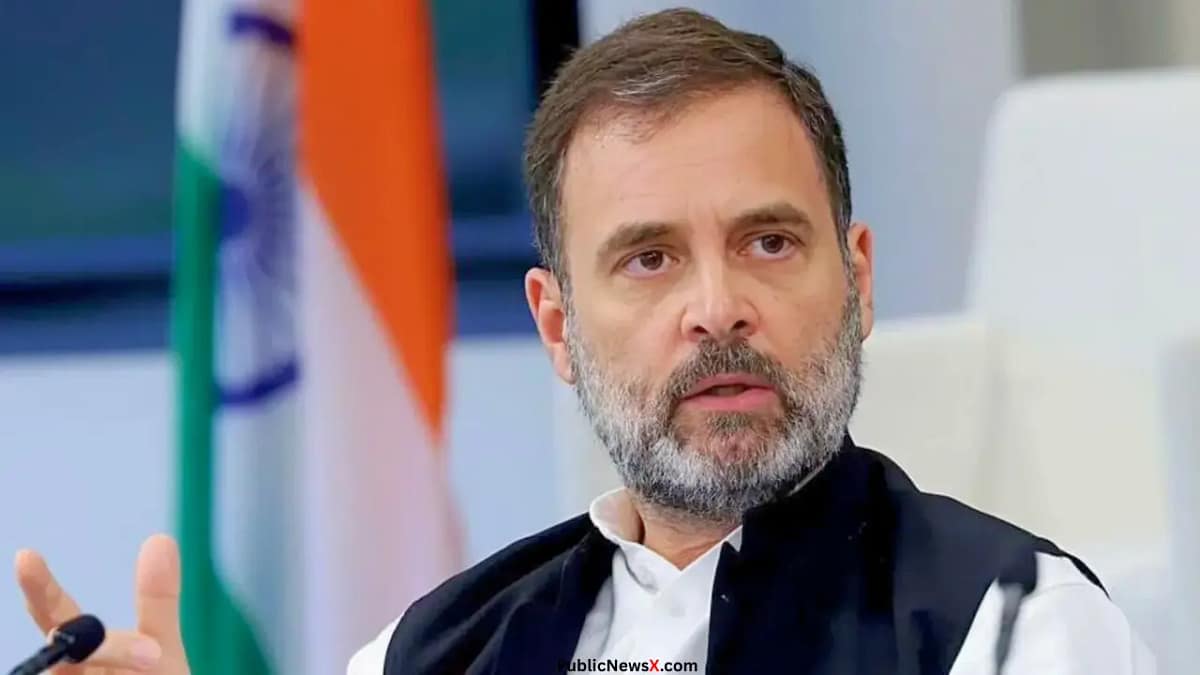
New Delhi: India’s opposition leader Rahul Gandhi on Thursday warned of growing risks to India’s energy security amid rising tensions in West Asia, saying in a post on ‘X’ that the country faces a “volatile phase” as conflict spreads closer to the Indian Ocean and threatens key oil supply routes used by India.
In a statement released on Thursday, the opposition said the world has entered a “volatile phase” and cautioned that “stormy seas lie ahead.”
The remarks come amid reports of heightened military and geopolitical activity in the region and growing concerns over global oil supply routes.
A central concern raised by the opposition is India’s dependence on the Strait of Hormuz, one of the world’s most important energy choke points.
According to energy trade data, more than 40% of India’s crude oil imports pass through the strait, along with a significant share of the country’s LPG and LNG shipments.
Any disruption in the passage, analysts say, could quickly affect India’s energy supply and domestic fuel markets.
The warning also comes a day after reports that an Iranian naval vessel was sunk within maritime boundaries near Sri Lanka, in waters that lie close to key Indian Ocean shipping lanes.
Some reports circulating in regional media and political circles claim the Iranian vessel had previously been invited to the region as part of diplomatic or naval engagement activities involving India, though the full circumstances of the incident remain unclear and have not been officially confirmed by governments involved.
The development has intensified debate in New Delhi over security in India’s immediate maritime neighborhood.
Diplomatic Balancing Under Scrutiny
India’s Opposition leaders also pointed to the government’s foreign policy posture during the ongoing Middle East crisis. They argued that Prime Minister Narendra Modi has maintained strong diplomatic support for Israel during the conflict.
At the same time, critics noted that the PM Modi has not publicly commented on the death of Iran’s Supreme Leader Ali Khamenei, a silence that some political observers interpret as an attempt to avoid escalating tensions with Iran.
Meanwhile, India is also engaged in discussions with the United States regarding potential energy cooperation, including possible access to oil supplies linked to Venezuela, according to policy and industry sources.
These talks have gained urgency as geopolitical tensions threaten global shipping routes and energy flows.
Against this backdrop, the opposition leader accused the government of failing to clearly address the unfolding risks.
“The world has entered a volatile phase. Stormy seas lie ahead. India’s oil supplies are under threat, with more than 40% of our imports transiting the Strait of Hormuz. The situation is even worse for LPG and LNG. The conflict has reached our backyard, Yet the Prime Minister has said nothing. At a moment like this, we need a steady hand at the wheel.”
Rahul gandhi- Leader of opposition, India
The opposition also criticized the government’s foreign policy direction, alleging that India’s strategic autonomy has been weakened in recent years.
India is the world’s third-largest importer of crude oil, and policymakers have long viewed the stability of Middle Eastern shipping lanes as vital to the country’s economic security.
Any sustained disruption to routes such as the Strait of Hormuz could lead to higher energy prices, supply constraints, and broader economic impacts.
Government officials have not yet publicly responded to the opposition’s latest remarks.
The situation remains fluid as tensions in West Asia continue to grow.
Share this content: