
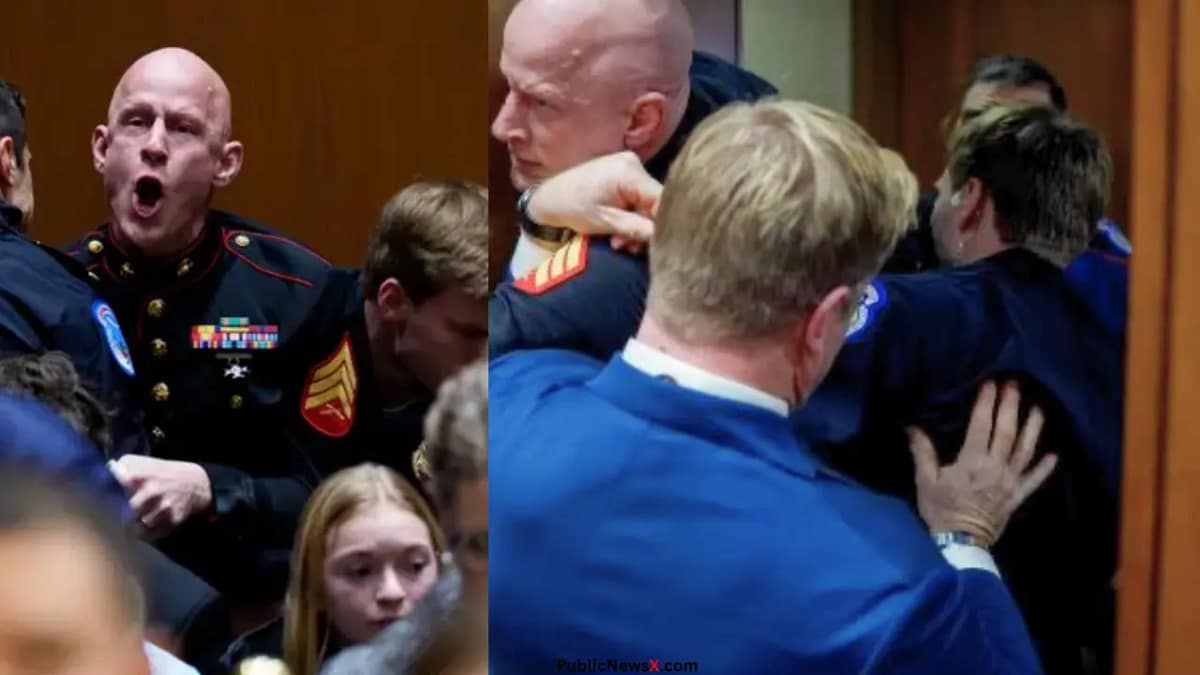
Washington/ New Delhi: A tense scene unfolded inside the U.S. Capitol on March 4, 2026, when Republican Senator Tim Sheehy joined United States Capitol Police officers in physically removing an anti-war protester who disrupted a Senate Armed Services Subcommittee hearing.
The protester was identified as Brian C. McGinnis, a former U.S. Marine and Green Party Senate candidate from North Carolina. McGinnis stood up during testimony from military officials and began shouting against possible American military involvement in the ongoing Iran-Israel tensions.
Witnesses said McGinnis criticized U.S. foreign policy and argued that the country should avoid entering another foreign war. He was reportedly heard saying that American soldiers should not be sent to fight in conflicts that did not directly threaten the United States.
Security personnel immediately approached the protester and attempted to escort him out of the hearing room after he refused to stop the interruption.
Video footage from the chamber shows McGinnis resisting removal by grabbing a doorway frame.
At that moment, Senator Sheehy, a former Navy SEAL and member of the committee, stepped down from the dais and assisted Capitol Police officers in pulling the protester away from the door.
During the struggle, McGinnis’ arm became trapped between the door and its frame. Some individuals inside the room shouted that his hand had been broken, though law enforcement authorities have not confirmed any fracture or severe injury.
The United States Capitol Police later issued a statement saying the protester had “violently resisted” officers’ attempts to remove him and had put both security personnel and others in the room at risk.
Officials added that three Capitol Police officers also suffered minor injuries during the incident.
McGinnis was arrested following the scuffle and faces multiple charges including assaulting law enforcement officers and resisting arrest.
In a post on social media platform X, Sheehy defended his involvement, stating that he intervened to help de-escalate a dangerous and chaotic situation.
He also expressed hope that the protester would receive medical attention and avoid further violent confrontation.
McGinnis later criticized the manner of his removal, calling it unnecessary and excessive, and said he was protesting against potential U.S. military escalation in Middle East conflicts.
The incident has sparked political debate over security protocols inside congressional hearings and the balance between maintaining order and allowing freedom of expression during legislative proceedings.
Authorities have not released any official medical report confirming that the protester’s hand was broken, and the case remains under review.
Share this content: