
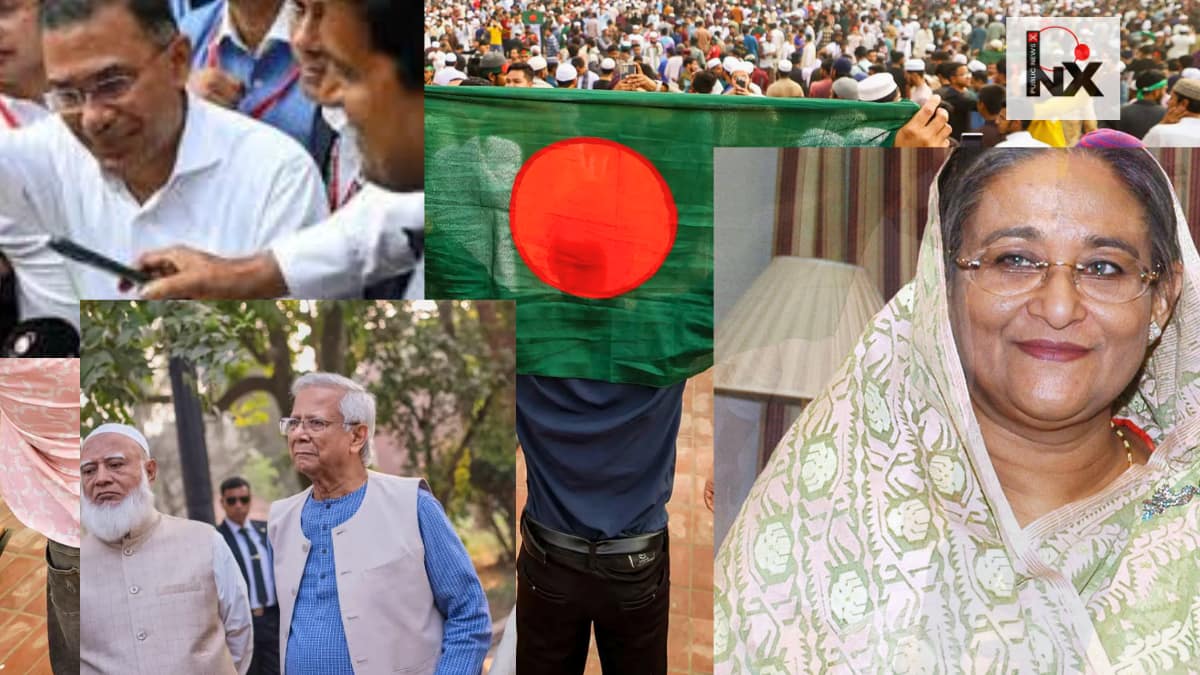
Dhaka/New Delhi: Bangladesh has entered a dramatic new political chapter following the February 2026 general election. The vote has redrawn the country’s electoral map and symbolically closed the long and controversial chapter of Sheikh Hasina’s rule.
The once dominant Awami League, which governed for nearly fifteen consecutive years, has been swept aside. In its place, the Bangladesh Nationalist Party has surged back to power with a commanding parliamentary majority.
Yet even as celebrations erupt among BNP supporters, troubling allegations of ballot rigging threaten to cloud what many hoped would be a clean democratic reset.
The political story of modern Bangladesh cannot be told without referencing the towering influence of Sheikh Hasina and her party, the Awami League. Returning to office in 2009, Hasina promised economic modernization and a vision of Digital Bangladesh. Under her leadership, the country saw strong GDP growth, infrastructure expansion, and rising global visibility in manufacturing and climate diplomacy.
But alongside economic progress grew accusations of authoritarianism. The 2018 general election was widely criticised by opposition groups as a midnight election, alleging ballot boxes were filled before polling began.
The 2024 election, boycotted by the opposition, resulted in an Awami League landslide victory amid low turnout and claims of democratic backsliding. Laws such as the Digital Security Act were accused of suppressing dissent, while reports of enforced disappearances and secret detentions deepened domestic and international concern.
The breaking point came in July 2024, when student protests over public sector job quotas spiraled into nationwide unrest. A heavy handed crackdown led to hundreds of casualties, igniting widespread outrage. On August 5, 2024, amid mounting pressure, Sheikh Hasina reportedly fled the country, bringing her long tenure to an abrupt and dramatic end.
In the political vacuum that followed, Nobel laureate Muhammad Yunus stepped in as Chief Adviser of an interim administration. Tasked with restoring public trust, depoliticizing the bureaucracy, and preparing for fresh elections, Yunus oversaw an eighteen month transitional period. One of the most symbolic reforms was the abandonment of Electronic Voting Machines.
BNP leaders had long argued that EVMs enabled digital manipulation. For the 2026 election, the Election Commission reverted to traditional paper ballots and transparent ballot boxes, a move intended to restore faith in the voting process. For many Bangladeshis, stamping a paper ballot felt like reclaiming a stolen democratic right.
The biggest beneficiary of the Awami League’s collapse was the Bangladesh Nationalist Party. Founded by former President Ziaur Rahman in the late 1970s, the BNP has historically positioned itself as a nationalist alternative to the Awami League’s secular liberal legacy.
Over the decades, the BNP’s political identity has blended Bangladeshi nationalism, market oriented economics, and a more conservative social outlook. It has also maintained strategic alliances with Islamist parties, most notably Jamaat-e-Islami, a relationship that has often drawn criticism domestically and internationally.
After years of legal battles and exile politics, BNP’s acting chairman Tarique Rahman now stands on the brink of becoming Prime Minister. The 2026 election results delivered the BNP an estimated two thirds majority in parliament, a political comeback few would have predicted at the height of Awami League dominance.
Despite the scale of the BNP’s victory, allegations of ballot rigging have surfaced across social media platforms. Videos circulating online appear to show groups of men inside polling centers stamping stacks of ballot papers. In other clips, voters allegedly report being pressured to cast their vote for the BNP’s Sheaf of Paddy symbol.
In the Bangladesh Election 2026, Jamaat-e-Islami emerged as a significant political force, securing between 63 and 76 seats in the Jatiya Sangsad and positioning itself as the principal opposition bloc after the BNP’s landslide victory.
Once sidelined and politically marginalised in previous election cycles, Jamaat capitalised on the vacuum created by the collapse and ban of the Awami League, mobilising its strong grassroots network and disciplined organisational structure.
Its performance marks a notable resurgence in national politics, signalling a shift in Bangladesh’s opposition landscape and giving the party renewed leverage in parliamentary debates and coalition dynamics.
While the absence of the Awami League from the ballot meant the outcome was likely to favor the BNP, critics argue that local level manipulation may still have occurred.
Observers note that paper ballots eliminate the risk of digital hacking but remain vulnerable to physical intimidation and booth capture, practices that have historically plagued elections in the region.
The BNP leadership has rejected claims of systemic fraud, attributing isolated incidents to local disputes. However, civil society groups argue that even sporadic ballot rigging undermines the moral authority of the new government.
The irony is difficult to ignore. A movement that rose to power on promises of restoring democracy now faces scrutiny over the very electoral integrity it pledged to defend.
Bangladesh’s 2026 election represents both closure and uncertainty. The political dominance of Sheikh Hasina has ended decisively, marking the conclusion of one of the most consequential eras in the nation’s post independence history.
The BNP’s return signals a dramatic rebalancing of political power and reflects a public desire for change. Yet structural challenges remain. Democratic institutions weakened over years of polarization will require rebuilding.
Trust in the Election Commission must be strengthened. The security apparatus must be depoliticized. Above all, the culture of electoral manipulation, whether digital or physical, must be eradicated.
The streets of Dhaka may celebrate the fall of one political order and the rise of another. The real test for the BNP government will not be its parliamentary majority but whether it can ensure that the next election is remembered not for ballot rigging allegations, but for democratic integrity. Only then will Bangladesh truly have turned the page.
Share this content: